
Scale:
How to Grow Without Creating Chaos
Growth Is Not the Same as Scale
Many businesses grow.
Few scale well.
Growth often means:
More hours
More effort
More moving parts
More pressure
Scale means:
More revenue
Without proportional increase in complexity
Without losing clarity
Without breaking systems
Scale is leverage.
Not expansion for its own sake.
Start Here
If your business is working but starting to feel stretched, start here.
Focus on:
Increase leverage
Simplify delivery
Raise prices responsibly
Delegate repeatable work
Scale should reduce pressure — not increase it.
Start small. Expand carefully.
This Pillar Is For You If
You're in the Scale stage and:
You're reaching capacity
You're working more hours to grow
You're managing too many moving parts
You're ready to increase leverage
You're trying to grow without adding chaos
Scale works best once your systems are stable.
Common Scaling Mistakes
Most scaling problems come from a few common mistakes:
Scaling before stabilising
Hiring too early
Adding too many offers
Automating before clarity
Expanding without leverage
Scale works best when foundations are stable.
The Simple Scale Framework
Scaling becomes easier when you focus on:
Increase leverage
Raise prices responsibly
Delegate repeatable work
Improve efficiency
Expand intentionally
Simple scale strategies outperform rapid expansion.
What Scale Actually Means (Here)
Scale is not:
Launching more offers
Being on every platform
Hiring too early
Adding layers of automation
Scale is:
Increasing average order value
Raising prices responsibly
Delegating repeatable work
Leveraging partnerships
Expanding capacity intentionally
Scale multiplies what already works.
It never fixes what doesn’t.
The Logic: Leverage Requires Stability
You can only scale when:
Your business model is clear
Your offer converts
Your traffic is consistent
Your systems are stable
Without those foundations, growth creates fragility.
Scale should feel lighter, not heavier.
If scale increases stress, the structure isn’t ready.
Scale Only Works When…
You are:
Consistently closing clients or sales
Delivering predictable outcomes
Booked near capacity
Clear on your positioning
If those aren’t true, go back to Business or Conversion first.
Scale comes after proof.
If You’re Fully Booked
That’s a capacity signal.
You can scale through:
Raising prices
Creating a higher-tier offer
Delegating delivery
Increasing efficiency
Don’t add more work.
Increase leverage.
Where Scaling Breaks Businesses
Scale fails when:
You expand before stabilising
You hire without documentation
You raise prices without positioning
You add offers without clarity
You automate chaos
Leverage multiplies structure.
Chaos multiplies mistakes.
What You’ll Find in This Pillar
Inside this pillar you’ll learn:
Leverage
Revenue Expansion
Execution Timing
Sustainable Growth
Scale is the final layer.
Not the starting point.
How Scale Sits at the Top of the Structure
Business creates foundation.
Traffic creates visibility.
Email builds relationship.
Conversion captures value.
Systems protect execution.
Scale multiplies what the other five prove.
Scale sits at the top — amplifying everything below it.
It amplifies — it does not replace.
Claim Your Free MP3 And PDF Training: The 3-Part Plan To Topping $100,000 Per Year In Profit

Enter your name and email address below to receive a new lesson delivered to your inbox once a week.
Your first lesson will be delivered immediately...
Latest Articles
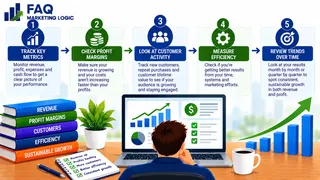
How Do I Know If My Business Is Growing Profitably?
Learn how to measure profitable business growth using revenue, expenses, margins and cash flow. ...more
Scale
October 23, 2026•11 min read
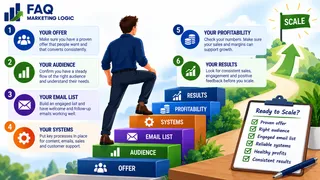
What Should I Improve Before Trying To Scale?
Learn what to improve before scaling, including your offer, conversion, margins, delivery, systems and customer value. ...more
Scale
October 09, 2026•12 min read
Copyright © 2026. Dean Branwhite, Masterclass Publications All Rights Reserved.
Privacy Policy | Terms of Services | Cookies Policy | FTC Disclaimer | Earnings Disclaimer | Site Information