
Why Do So Many People Make Costly Investing Mistakes?
March 2025
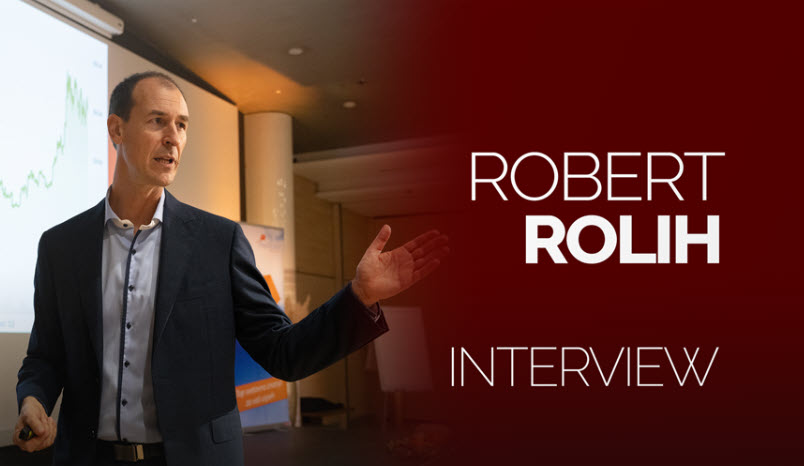
An Interview With Robert Rolih
Making money and knowing what to do with it are two very different skills. Someone can build a successful business, earn a good income and still make expensive mistakes when deciding how to manage their savings.
That's something Robert Rolih, author of The Million Dollar Decision, discovered through his own experience.
In this archive interview, Robert explains how losing money through investments encouraged him to investigate the financial industry. He shares what he learned about investment fees, short-term trading, financial education and why understanding the decisions you make with your money is so important.
Listen to the Robert Rolih Interview
How Robert's Investment Mistakes Changed His Direction
Robert grew up in a small village in Slovenia, where his family had limited financial resources. As a student, he started a business that eventually became profitable, giving him money to invest for the first time.
However, he admits that he knew very little about investing.
Like many people, Robert turned to financial advisers and other industry professionals for guidance. Over several years, he became increasingly disappointed with the results.
That experience encouraged him to investigate how the financial industry operated. He read hundreds of books, attended workshops and spoke with people working inside the industry.
What particularly concerned him was how investment fees and commissions could reduce the amount of money investors retained.
His research eventually led to The Million Dollar Decision, a book intended to help people understand those costs before making investment decisions.
Why Investment Fees Deserve More Attention
One of Robert's central arguments is that relatively small annual fees can make a substantial difference over a long investment period.
He explains that some investment products charge ongoing management fees that may appear insignificant when considered individually.
However, those charges accumulate over time and can reduce the amount available for future investment growth.
Robert contrasts higher-fee investment products with lower-cost alternatives, including index funds and exchange-traded funds (ETFs).
An ETF is an investment fund traded on a stock exchange. Many ETFs hold collections of shares or other assets, allowing investors to spread their exposure across multiple holdings.
Not every ETF is low-cost or suitable for every investor, but Robert's broader point is worth considering: understanding what you're paying is an important part of evaluating any financial product.
Why Robert Prefers Long-Term Investing
Robert is particularly critical of short-term trading, which he believes encourages people to concentrate on frequent buying and selling rather than developing a long-term strategy.
During the interview, he describes attending trading courses and seeing how difficult it was for participants to achieve consistent results.
He argues that trading costs, emotional decisions and the pressure to predict short-term market movements can work against inexperienced investors.
His preferred approach involves understanding the investments being made, considering the associated costs and taking a longer-term view.
However, long-term investing still involves risk. Markets can fall, investments can lose value and historical performance cannot guarantee future returns.
The useful lesson is to understand the risks and costs of a strategy rather than assuming that frequent activity will automatically produce better results.
Why Financial Education Matters
Another recurring theme is the importance of taking an active interest in financial decisions.
Robert believes people should understand the basic differences between investment products, the charges involved and the organisations holding their money.
He also warns about scams and encourages people to check whether financial providers are appropriately regulated.
For UK readers, that includes checking relevant permissions through the Financial Conduct Authority before dealing with an investment business.
Robert also discusses how fear and overconfidence can influence investment decisions, particularly when markets become volatile.
His message is that learning the fundamentals can help people ask better questions and make more informed choices.
What Can Business Owners Learn From This Interview?
Although Robert's interview concentrates on investing, there's a wider lesson for anyone running a business.
Generating revenue is only part of building financial security. Understanding costs, assessing risks and making informed decisions about money also matter.
Business owners regularly make decisions about software subscriptions, advertising expenditure, financing and professional services.
The same principle applies: know what you're paying for, understand the risks and consider the long-term consequences.
Earning more money can create opportunities, but understanding how that money is managed is equally important.
Listen to More of the Conversation
Download the Interview Transcript
If you'd prefer to read the conversation or revisit Robert's explanations of investment fees, financial education and long-term investing, the complete transcript is available below.
→ Download the Robert Rolih Interview
Want to Explore Better Business Decisions?
Robert's experience highlights the importance of understanding the financial consequences of the decisions you make.
For online business owners, developing a clear business model, controlling unnecessary costs and making informed choices are useful starting points.
The FAQ Marketing Logic Business pillar explores practical ways to build those foundations.
Related Articles
→ How Do I Know If My Business Is Growing Profitably?
→ How Do I Turn Skills Into a Sellable Offer?
You can also explore more conversations in the FAQ Marketing Logic Audio Interview Collection.
This interview is provided for educational purposes and does not constitute personal financial advice. Investment products involve risks, including the possibility of losing money. Financial products, regulations and market conditions may have changed since the original recording.