How Can You Turn Your Knowledge Into a Profitable Business?
An Interview With James Malinchak
Many people have valuable knowledge, experience or skills without recognising that other people might be willing to pay to learn from them. They assume that building a business around their expertise requires years of preparation, expensive qualifications or an entirely new product.
Yet some of the most successful information businesses begin with something much simpler. Someone recognises that their experience could help others, finds a practical way to share it and gradually develops a business around that knowledge.
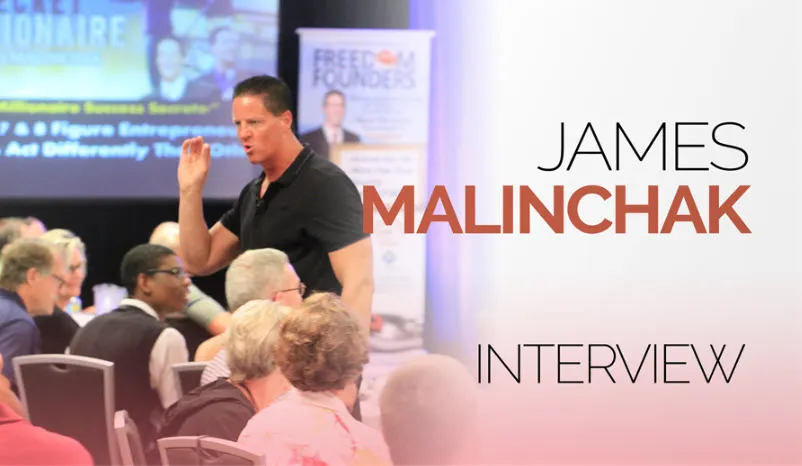
In this archive interview, released in August 2020, motivational speaker, author and business coach James Malinchak shares how he developed a career in professional speaking, the importance of learning from successful people and why taking action matters more than waiting for the perfect opportunity.
The conversation also explores how existing content can become the foundation of a book, why continuous learning is essential and how entrepreneurs can make better use of the knowledge they already possess.
Listen to the James Malinchak Interview
About James Malinchak
James Malinchak is a motivational speaker, author and business coach who has worked with entrepreneurs, professionals and organisations seeking to improve their performance and business results. He has also appeared on the American television programme Secret Millionaire.
However, becoming a professional speaker wasn't something James had originally planned.
During the interview, he describes growing up in a small Pennsylvania steel town where his father worked in the steel industry and his mother served lunches at a local school. His family didn't have considerable financial resources, but his parents encouraged him to work hard, believe in himself and remain focused on what mattered.
James also credits a successful cousin with introducing him to possibilities he hadn't previously imagined. Seeing someone from a similar background achieve financial success helped him recognise that his own circumstances didn't have to determine his future.
That early experience shaped his belief that learning from people who have already achieved something worthwhile can dramatically shorten the time it takes to make progress.
How James Discovered the Business of Professional Speaking
One of the most entertaining stories in the interview concerns how James first became interested in professional speaking.
In 1995, he attended a presentation delivered by former American football quarterback Joe Theismann. James enjoyed the speech and was impressed by the way Theismann entertained, motivated and inspired his audience.
Afterwards, they went to lunch together, and James asked whether speakers were actually paid for their appearances.
He assumed the payment might be around $50.
When Theismann explained that he had received $10,000 for the presentation, James realised that professional speaking was an established business rather than simply an opportunity to share interesting stories.
The discovery changed his thinking.
He recognised that speaking could allow him to help people while earning an income from his knowledge and communication skills.
His first steps were modest. James explains that he delivered approximately 80 presentations without payment while learning how the speaking industry worked. His first paid engagement earned him just $50 and a free dinner, despite involving several hours of travel.
Although the financial return was small, the experience gave him an opportunity to develop his skills and understand the business from the inside.
There's a useful lesson here for anyone considering an information business. You don't necessarily need to begin with a large audience or an expensive product. Sometimes the most valuable first step is finding a way to test your abilities, gain experience and discover whether people value what you offer.
The FAQ Marketing Logic Business pillar explores how to identify opportunities, test ideas and develop offers without building something unnecessarily complicated.
Why Learning From Successful People Can Save Years of Effort
Throughout the interview, James repeatedly returns to the importance of learning from people who have already achieved the results you're working towards.
He explains that his successful cousin helped him recognise opportunities that hadn't previously seemed possible. More importantly, James listened to the advice he received and acted upon it.
For him, mentorship isn't simply about receiving encouragement. It's about learning practical methods from someone who understands the challenges involved.
He believes entrepreneurs can waste considerable time trying to work everything out independently when someone else has already solved many of the same problems.
That doesn't mean copying another person's business without considering your circumstances. It means studying proven approaches, understanding why they work and adapting the useful lessons to your own situation.
James also makes an important distinction between learning and implementation. Advice only becomes valuable when you do something with it.
He doesn't believe that success comes from luck alone. In his view, preparation creates opportunities, but people still need to recognise those opportunities and take action.
This is particularly relevant when developing digital products. It's easy to spend months researching business models, studying marketing techniques or collecting training materials without actually creating an offer.
At some point, progress depends on putting what you've learned into practice.
You May Already Have the Content for Your First Book
One of the most practical sections of the interview concerns James's approach to writing books.
He explains that many people believe they need to sit down and write an entirely new manuscript before they can become an author.
However, they may already have useful material scattered across blog articles, social media posts, presentations and other content they've created over time.
James describes speaking with a well-known personality who regularly shared short, inspirational messages online. Rather than suggesting that the person write a lengthy book from scratch, James recommended collecting those existing messages and organising them into a publication.
He shares another example involving a birthday present he created for someone who regularly posted encouraging messages on Facebook.
James collected approximately 100 of her previous posts, arranged them into a book and presented it as a surprise gift. The recipient hadn't considered that her existing content could become something more substantial.
For information publishers, this is a particularly valuable idea.
A collection of useful articles might become a short guide. A series of training emails could provide the starting point for a workbook. Material originally created for presentations might be developed into a structured course.
The important consideration is whether the finished resource provides genuine value to its intended audience.
Simply collecting material doesn't automatically create a worthwhile product. It still needs to be organised, edited and presented in a way that helps readers achieve something useful.
James's approach shows that product creation doesn't always have to begin with a blank page.
Willie Crawford's interview about building an online business offers another example of developing information products from existing knowledge and experience.
Why Continuous Learning Matters
James also discusses his enthusiasm for reading, studying and learning from successful people.
He explains that education shouldn't end when someone leaves school or completes formal training. Instead, learning should remain part of everyday life.
During the interview, he describes preparing to interview a successful sports agent by purchasing and reading the agent's books beforehand.
His reasoning is straightforward. By understanding someone's ideas and experiences in advance, he can ask better questions and gain more from the conversation.
It's an approach that applies equally well to running an online business.
Whether you're developing a product, improving your marketing or exploring a new business model, taking time to understand the subject can help you make better decisions.
However, James's earlier point about implementation remains important. Learning becomes most useful when it leads to practical improvements.
For example, studying effective sales messages is valuable, but the real benefit comes when you use those lessons to make your own offers clearer and more persuasive.
Readers interested in improving how they present products and services can explore the FAQ Marketing Logic Conversion pillar.
Reaching More People With the Knowledge You Already Have
Towards the end of the interview, James discusses his plans to expand his reach through podcasting, YouTube and social media.
Although he had already established a successful speaking and coaching business, he recognised that many people who could benefit from his experience had never heard of him.
Rather than relying entirely on his existing reputation and professional connections, he wanted to make his ideas accessible to a wider audience.
He explains that he was investing in teams to help develop these additional channels.
This raises an important point for anyone building an information publishing business.
Creating useful content is only one part of the process. You also need a way for people to discover it.
A helpful guide won't achieve much if nobody knows it exists. Similarly, an informative blog needs a practical approach to attracting readers who are interested in its subject.
The FAQ Marketing Logic Traffic pillar explores how to attract relevant visitors and help useful content reach the people who need it.
James also shares a simple branding lesson when discussing his website. He believes a memorable name that creates a clear mental image can make it easier for people to remember where to find you.
It's a small detail, but one worth considering when developing a website, product or business identity.
What Can Online Business Owners Learn From This Interview?
What I particularly like about James Malinchak's story is that his business didn't begin with an elaborate plan or a large investment.
He discovered an opportunity through someone else's experience, recognised that he had something valuable to offer and gradually developed the skills needed to turn that opportunity into a career.
His comments about creating books from existing material are especially relevant to information publishers. Many people already have more useful content than they realise, but haven't considered how it might be organised into a product.
The interview also reinforces the importance of mentorship, continuous learning and taking practical action.
You don't need to become a professional speaker or build a large coaching business to benefit from these lessons. The same principles apply when creating a digital guide, developing a training programme or building a website around a specialist subject.
Start by recognising what you already know, consider who might benefit from that knowledge and look for a manageable way to turn it into something useful.
Listen to More of the Conversation
Download the Interview Transcript
If you'd prefer to read the conversation or revisit particular points, you can download the complete James Malinchak interview transcript.
→ Download the James Malinchak Interview Transcript
The transcript preserves the original conversation from the archive interview released in August 2020. References to websites, products, services and business practices reflect that period and may have changed since the recording.
Want to Explore Turning Knowledge Into Digital Products?
James's interview demonstrates how valuable information can already exist in the experience, skills and content you've developed over time.
But turning that knowledge into something people will purchase requires more than simply putting information into a document. You need to identify a suitable audience, understand what they want and develop a product that provides a useful result.
One alternative is to explore product licensing, where you obtain appropriate rights to existing material and develop a business around products you haven't created entirely from scratch.
If you'd like to learn more about how that approach works, I've got a free resource that introduces the process.
→ Discover How Product Licensing Works
Discover More Audio Interviews
The FAQ Marketing Logic Audio Interviews collection brings together conversations with experienced marketers, entrepreneurs and business owners, covering different aspects of building and growing an online business.
Each interview includes an accompanying article and downloadable transcript, allowing you to explore the ideas at your own pace.