Email Segmentation: When and How to Segment Your List
TL;DR
Segment only when relevance increases revenue.
Do not segment for vanity.
Segment for behavioural differences.
IN SHORT
Segment your list when:
Different subscribers need different messages
Buying intent varies
Product relevance differs
Engagement levels diverge
Do not segment too early.
Start simple.
Increase complexity only when data justifies it.
WHY THIS WORKS
Email performance is driven by relevance.
Cause → The message matches the subscriber’s context.
Effect → Higher engagement.
Result → Higher conversion.
Mass emails optimise for efficiency.
Segmentation optimises for precision.
Precision increases revenue per subscriber.
But complexity increases workload.
Balance both.
When NOT to Segment
Avoid segmentation when:
Your list is under 1,000 subscribers
You only sell one core offer
You lack behavioural data
Your messaging clarity is weak
Segmentation cannot fix unclear positioning.
It amplifies what already works.
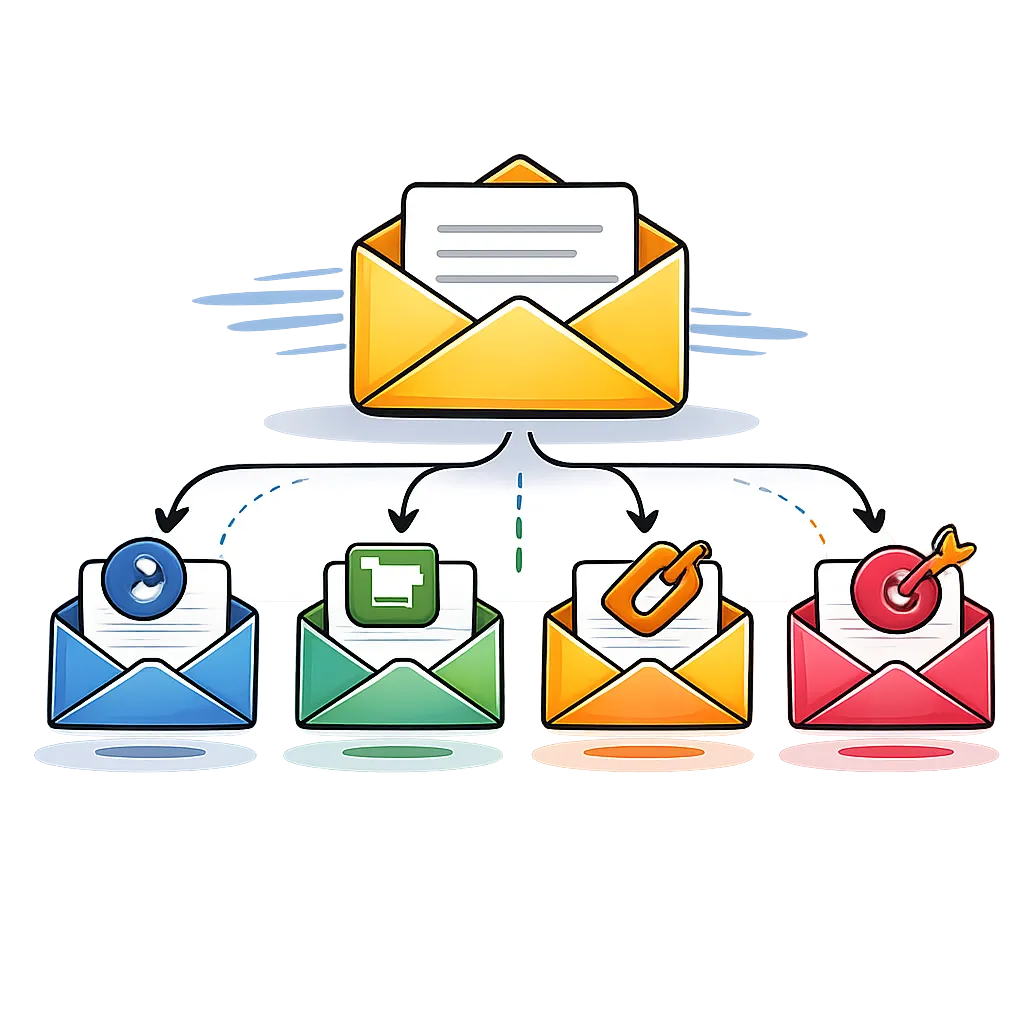
The 4 Smart Segmentation Layers
1. Engagement-Based
Segment by:
Active (opened/clicked last 30–60 days)
Inactive
This protects deliverability.
And improves open rates.
2. Interest-Based
Segment by:
Content topic clicked
Lead magnet downloaded
Category viewed
Clicks signal intent.
Intent signals buying probability.
3. Behaviour-Based
Segment by:
Viewed sales page
Started checkout
Abandoned cart
Attended webinar
Behaviour is stronger than demographics.
4. Purchase-Based
Segment by:
Bought product A
Bought product B
Never purchased
Do not sell the same product twice unnecessarily.
Unless strategic.
REAL TALK
Most businesses segment too early.
They create:
12 tags
8 automations
3 workflows
And send nothing consistently.
Segmentation is an optimisation layer.
Not a starting point.
Build frequency and engagement first.
A Simple Segmentation Progression
Stage 1
→ One list. Send weekly.
Stage 2
→ Separate active vs inactive.
Stage 3
→ Segment by product interest.
Stage 4
→ Behaviour-based automation.
Do not skip stages.
COFFEE CUP TIP ☕
If segmentation reduces your sending consistency, simplify.
Revenue follows rhythm first.
Precision second.
STORY TIME
A digital course creator had:
9 complex segments
Irregular sending
Declining revenue
We simplified to:
Active list
Past buyers
Prospects
Increased sending frequency.
Revenue rose 27% in 60 days.
Complexity was the bottleneck.
FAQ QUICK FIX
If unsure how to start:
1. Create active vs inactive segment
2. Send weekly to active list
3. Re-engage inactive quarterly
4. Tag clicks by topic
5. Build simple behaviour automation
Layer gradually.
QUICK RECAP
Segment for relevance
Start simple
Behaviour > demographics
Complexity slows execution
Precision increases revenue per subscriber
COMMON MISTAKES
Mistake: Over-segmenting early
Fix: Build engagement foundation first
Mistake: Segmenting by assumptions
Fix: Segment by behaviour
Mistake: Letting automation replace strategy
Fix: Maintain clear weekly rhythm
FAQ
Q: Does segmentation always increase revenue?
Only when relevance improves and execution remains consistent.
Q: Should I segment by demographics?
Usually less powerful than behavioural data.
Q: How many segments is too many?
When you cannot maintain consistent communication.
Q: Can small lists benefit from segmentation?
Yes, but keep it simple — active vs inactive is enough.
TRY THIS TODAY
Open your email platform.
Create two segments:
Active (last 60 days)
Inactive (no engagement 60+ days)
Send your next campaign only to active.
Measure the difference.
NEXT STEP
Now we move from optimisation to onboarding:
First impressions shape lifetime value.
→ How to Build a High-Converting Welcome Sequence
RELATED ARTICLES
→ How to Increase Email Engagement and Click-Through Rates
→ How to Structure Email CTAs for Higher Conversions
→ How Long Should Marketing Emails Be? (Short vs Long Explained)
If you're starting a business, return to the Business pillar to strengthen your offer foundation.