
How Can Marketing Automation Help Your Online Business Grow?
An Interview With Clate Mask
Running a small business involves managing a surprising number of different activities. Alongside attracting new customers and making sales, there's the everyday work of answering enquiries, following up with prospects and keeping in touch with people who have already purchased.
The difficulty is that these activities often compete for the business owner's attention. When time is limited, it's easy to concentrate on customers who are ready to buy immediately while overlooking people who might become customers later.
That's where marketing automation can make a difference. Rather than trying to remember every follow-up or manually manage every customer relationship, a business can establish simple systems that help keep those important activities moving.
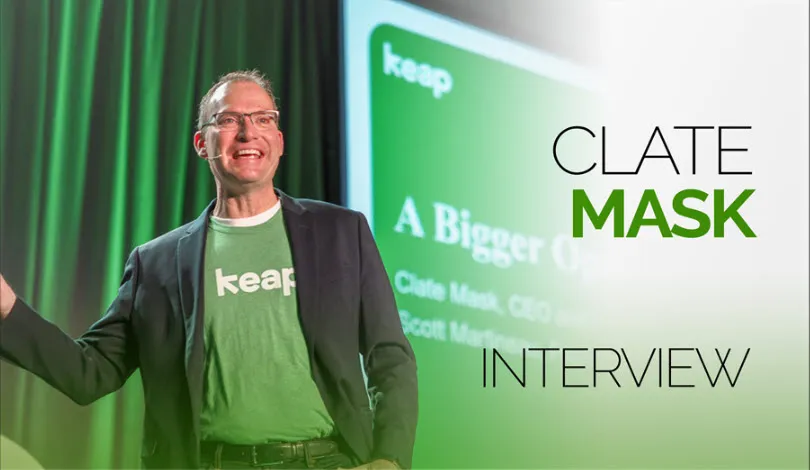
In this archive interview, originally released in September 2020, Clate Mask, co-founder and CEO of Keap, formerly known as Infusionsoft, discusses how sales and marketing automation can help small businesses grow without becoming overwhelmed by day-to-day administration.
The conversation also explores the challenges of entrepreneurship, the importance of customer relationships and why building a successful business should ultimately create greater freedom for its owner.
Listen to the Clate Mask Interview
About Clate Mask
Clate Mask co-founded the company that became Infusionsoft and later Keap, developing software designed to help entrepreneurs manage customer relationships, sales and marketing activities.
During the interview, Clate explains that the original business grew from helping small companies improve their online sales and marketing. What he and his colleagues discovered was that many businesses struggled with disorganisation, particularly when it came to following up with potential customers.
They might collect enquiries, exchange contact details or attract people who expressed an interest in their services, but they didn't always have a reliable process for continuing those conversations.
Clate recognised that automating the right activities could help business owners communicate more consistently without having to manage every individual interaction themselves.
He also discusses the evolution from Infusionsoft to Keap. While Infusionsoft had become known for its extensive capabilities, some customers wanted a simpler starting point. Keap was developed to address that need, with the broader ambition of making business growth easier to manage.
The specific software versions mentioned in the interview reflect August 2020 and may have changed since then. However, the underlying problems Clate describes remain familiar to many online business owners.
Why Good Prospects Often Slip Through the Cracks
One of the most useful parts of the interview concerns what happens after someone first expresses an interest in a business.
Clate explains that most business owners are reasonably good at responding to prospects who are ready to buy immediately. Those enquiries tend to receive attention because there's an obvious opportunity to make a sale.
The problem is that many potential customers aren't ready to make a decision straight away.
They might be researching their options, comparing different solutions or simply waiting until the timing is right. Without a follow-up process, these people can easily be forgotten.
Clate identifies three common difficulties: business owners don't have enough time to follow up consistently, they lack an established process, and they're sometimes unsure what to say or when to say it.
Marketing automation can help address those problems by organising contacts and delivering relevant messages at appropriate points in the customer relationship.
For an information publishing business, this might involve sending a welcome email when someone downloads a free guide, following up with additional advice and eventually introducing a relevant paid product.
The aim isn't to send more messages simply because the technology makes it possible. It's to maintain useful communication with people who have already shown an interest.
Building an email list is only the beginning. The real value comes from developing relationships with subscribers, understanding their needs and giving them reasons to stay engaged. It's an approach that Paul Counts also discusses in his interview on email list building, particularly the importance of creating an audience you can communicate with consistently.
You can also explore practical approaches to follow-up and subscriber engagement in the FAQ Marketing Logic Email Marketing pillar.
Understanding the Three Stages of Customer Relationships
Clate introduces a framework he calls lifecycle marketing, which breaks the customer relationship into three main stages.
The first is collecting leads. This involves attracting people who might be interested in your products or services and giving them a reason to begin a relationship with your business.
The second is converting clients. Once someone has expressed an interest, the business needs a way to help them understand the offer, answer their questions and decide whether purchasing makes sense.
The third is creating fans. Rather than treating the first sale as the end of the relationship, the business continues providing value and staying in touch with existing customers.
Clate explains that viewing a business through these stages helps entrepreneurs understand where their marketing activities belong. Instead of chasing every new technique, they can identify which part of the customer journey needs attention.
For example, a business attracting plenty of enquiries but making few sales may need to improve its follow-up or offer presentation. Another business might convert customers successfully but rarely communicate with them afterwards.
The FAQ Marketing Logic Conversion pillar explores how to identify and improve these kinds of weaknesses in the customer journey.
Why Automation Should Make Business Simpler
Another important theme is the difference between having powerful technology and having technology that's practical to use.
Clate explains that Infusionsoft became known for its extensive capabilities, but that level of sophistication wasn't necessarily what every small business needed.
Some entrepreneurs wanted a simpler solution they could begin using immediately, rather than spending considerable time learning a complicated system.
This influenced the development of Keap and its emphasis on making automation more accessible.
There's an important lesson here for anyone building an online business. A system doesn't have to be complicated to be useful, and introducing automation shouldn't create more work than it saves.
A straightforward welcome email sequence, for example, may be more valuable than an elaborate marketing funnel that takes weeks to build and is difficult to maintain.
Similarly, keeping customer information organised can be more useful than purchasing additional software without a clear purpose.
The goal is to make important activities happen more reliably while reducing the amount of manual work required.
This is something we've explored throughout the FAQ Marketing Logic Systems pillar, particularly when deciding which business activities are worth automating first.
Conquering the Chaos of Entrepreneurship
Clate also discusses his book, Conquer the Chaos, which he co-authored after recognising recurring problems among the entrepreneurs his company worked with.
He explains that many people start businesses because they want greater freedom, more control over their income and the opportunity to make a meaningful difference.
Unfortunately, the reality can be very different.
Instead of gaining freedom, some business owners become trapped in a cycle of long working hours, constant interruptions and responsibilities that seem impossible to escape.
Clate describes how his team studied the patterns behind these problems and the approaches used by entrepreneurs who managed to overcome them.
Two important areas emerged: developing the right entrepreneurial mindset and putting effective systems and strategies in place.
The message isn't that automation can solve every business problem. Rather, it's that having a clearer way to organise and manage the business can help owners make better decisions and reduce unnecessary pressure.
Clate's emphasis on relationships and repeat customers also connects with Neil Stafford's interview about membership businesses, where maintaining an ongoing relationship is an important part of the business model.
Why Existing Customers Deserve More Attention
One particularly useful observation comes when Clate discusses customers who have already made a purchase.
He explains that a business might have someone who has purchased several products but remains unaware of other solutions the company offers.
If the business doesn't maintain that relationship, the customer may eventually purchase something similar elsewhere simply because they didn't know it was available.
This doesn't mean constantly promoting additional products. It means understanding customers' needs and communicating when there's something genuinely relevant to offer.
For information publishers, that could involve introducing a more advanced training programme after someone completes a beginner's course, or recommending a related resource that helps them take the next step.
The important point is that customer relationships shouldn't be forgotten once the initial transaction is complete.
What Can Online Business Owners Learn From This Interview?
What stands out from Clate Mask's interview is how much business growth depends on activities that are relatively straightforward but easy to neglect.
Following up with enquiries, communicating with customers and keeping contact information organised aren't particularly exciting tasks. However, they can make a considerable difference to how effectively a business operates.
Clate's lifecycle marketing framework provides a useful way to think about those activities. Attract potential customers, help them make informed purchasing decisions and continue building the relationship afterwards.
For a smaller online business, there's no need to implement an elaborate automation platform immediately. Start by identifying where valuable opportunities are being missed and consider whether a simple process could help.
Perhaps new subscribers aren't receiving a welcome email, or existing customers never hear about relevant resources. These are practical problems that can often be improved without making the business more complicated.
Ultimately, the aim is to build a business that serves customers consistently while giving its owner more time to concentrate on the work that matters.
Listen to More of the Conversation
Download the Interview Transcript
If you'd prefer to read the conversation or revisit particular points, you can download the complete Clate Mask interview transcript.
→ Download the Clate Mask Interview Transcript
The transcript preserves the original conversation from the archive interview released in August 2020. References to software products, features and business practices reflect that period and may no longer be current.
Want to Make Your Email Follow-Up More Effective?
Clate's interview demonstrates why maintaining relationships with prospects and customers is so important. However, you don't need complicated software to begin improving how you communicate with your audience.
A useful starting point is learning how to write emails that people want to read, develop relevant follow-up messages and introduce offers without overwhelming subscribers.
If you'd like to explore this further, I've got a free resource that introduces a practical approach to using email marketing in an online business.
→ Discover The Lazy Way To Email Riches
Discover More Audio Interviews
The FAQ Marketing Logic Audio Interviews collection brings together conversations with experienced marketers, entrepreneurs and business owners, covering different aspects of building and growing an online business.
Each interview includes an accompanying article and downloadable transcript, allowing you to explore the ideas at your own pace.