
How Do I Build Topical Authority?
TL;DR
Topical authority is built by covering a subject deeply and systematically — not randomly.
Depth + structure + internal linking = authority.
IN SHORT
You build topical authority by:
Choosing one clear subject
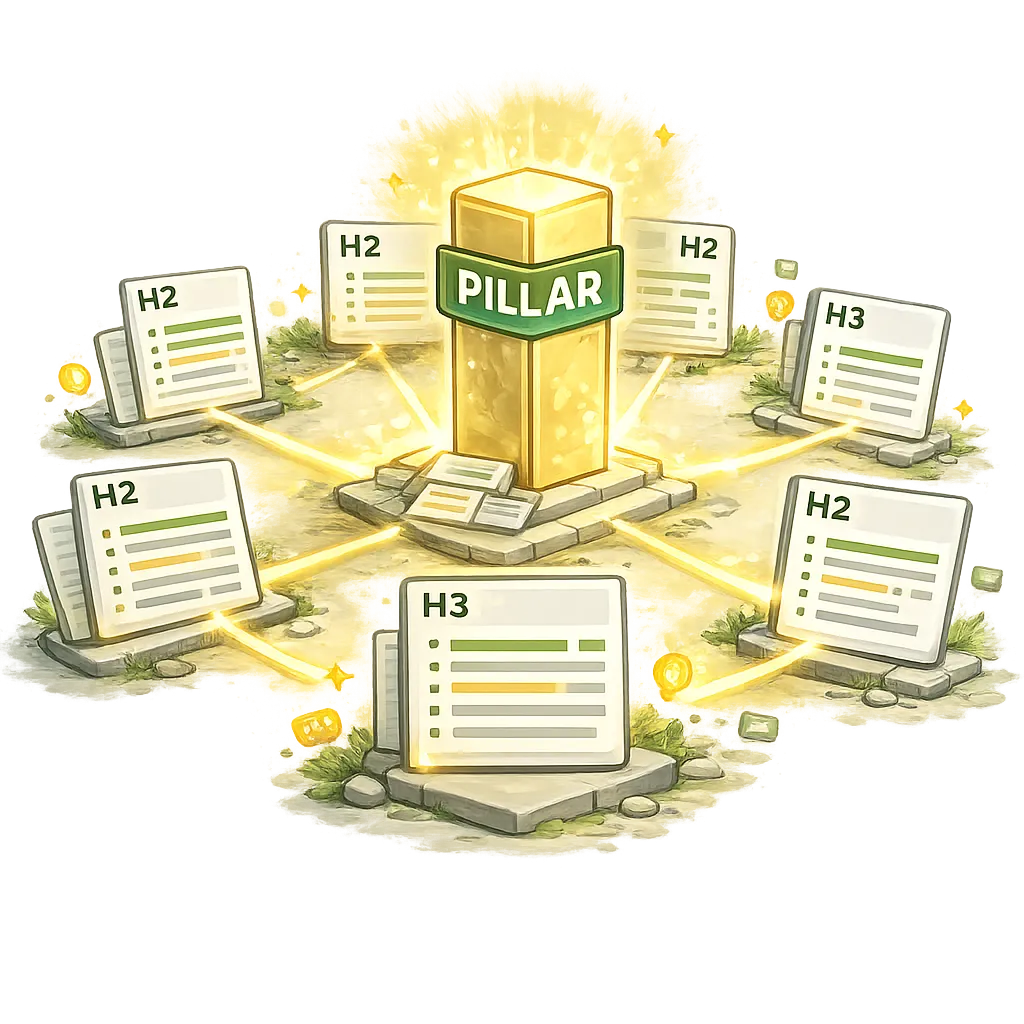
Creating a pillar page
Publishing 6–10 tightly related supporting articles
Internally linking them logically
Updating them consistently
Authority is built vertically.
Not broadly.
WHY THIS WORKS
Search engines and AI systems measure:
Subject depth
Semantic relationships
Internal linking clarity
Content completeness
Cause → You cover a topic comprehensively.
Effect → Systems detect thematic ownership.
Result → Rankings, citations, and trust increase.
One article suggests interest.
A structured cluster signals authority.
What Topical Authority Actually Means
It does not mean:
Publishing 100 random blog posts
Targeting dozens of unrelated keywords
Writing surface-level content
It means:
Owning a defined subject area.
Example:
Not “marketing.”
But:
Email frequency
Email segmentation
Welcome sequences
Sales email structure
Monetisation strategy
Structured depth.
The 5-Step Authority Framework
1. Define One Core Topic
Choose:
One clear domain
One specific problem space
One audience
Clarity precedes authority.
2. Create a Pillar Page
Your pillar page:
Defines the topic
Links to all sub-articles
Acts as subject anchor
It signals ownership.
3. Publish Supporting Articles (6–10)
Each article should:
Address a sub-question
Be interlinked
Avoid topic overlap
This creates semantic density.
4. Link Vertically
Every supporting article should:
Link back to pillar page
Link to 1–2 siblings
Move reader forward logically
Random linking weakens clarity.
Structured linking strengthens it.
5. Maintain and Expand
Authority compounds when you:
Update older posts
Expand subtopics
Improve clarity over time
Authority is cumulative.
REAL TALK
Most creators attempt horizontal growth.
They publish:
One post on SEO
One on branding
One on productivity
One on mindset
This confuses search systems.
And readers.
Depth builds recognition.
Breadth builds noise.
Why Clusters Outperform Single Posts
Single post:
→ Isolated signal
Cluster:
→ Reinforced subject ownership
AI systems increasingly reward:
Topic completeness
Structured knowledge
Consistent terminology
Clusters create that.
COFFEE CUP TIP ☕
Before writing a new article, ask:
“Does this strengthen an existing cluster?”
If not, reconsider.
STORY TIME
A founder had 72 blog posts across 18 topics.
Traffic was flat.
We:
Consolidated into 4 topic clusters
Built structured pillar pages
Removed off-topic articles
Within 5 months:
Organic traffic increased 64%
Keyword rankings stabilised
AI visibility improved
Same domain.
Better structure.
FAQ QUICK FIX
To start building authority:
1. Choose one core topic
2. Outline 8 related sub-questions
3. Create one pillar page
4. Publish supporting articles weekly
5. Interlink intentionally
Authority grows from repetition with structure.
QUICK RECAP
Authority = structured depth
Clusters outperform isolated posts
Internal linking signals ownership
Breadth dilutes impact
Maintenance compounds growth
COMMON MISTAKES
Mistake: Publishing unrelated content
Fix: Build clusters
Mistake: Overlapping topics
Fix: Define clear sub-questions
Mistake: Ignoring internal linking
Fix: Link vertically and logically
FAQ
Q: How long does it take to build topical authority?
Typically 3–9 months depending on niche and consistency.
Q: How many posts are needed?
Usually 6–10 well-structured articles per cluster.
Q: Should I target multiple topics at once?
Not initially. Focus builds faster authority.
Q: Does authority improve conversion?
Yes. Trust increases when depth is visible.
TRY THIS TODAY
Write down:
Your core topic.
Then list 8 specific sub-questions under it.
That is your next 8 articles.
NEXT STEP
Now we address scale expectations:
Because authority takes volume — but not infinite volume.
→ How Do I Build Topical Authority Faster?
RELATED ARTICLES
→ What Is GEO and How Does It Affect My Content?