
How Can You Protect Your Online Business and Avoid Legal Mistakes?
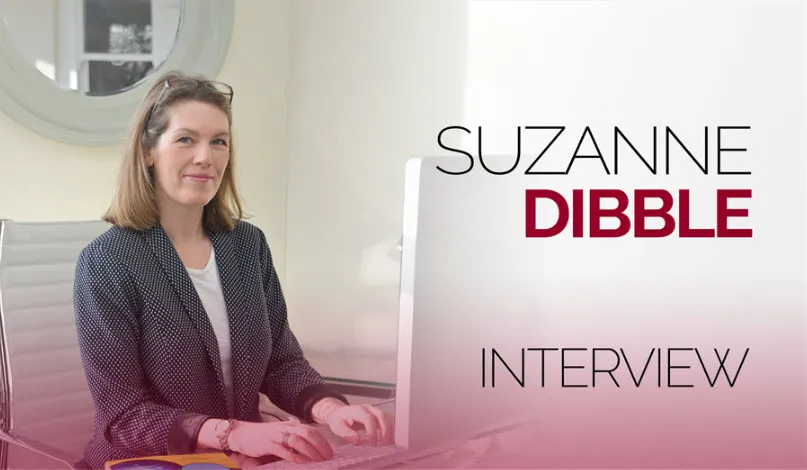
An Interview With Suzanne Dibble
Starting an online business often involves concentrating on the exciting parts. Choosing a product, creating a website, attracting customers and making those first sales tend to receive most of the attention.
However, there's another side to running a business that can be easy to overlook. Understanding your legal responsibilities, protecting your work and handling customer information correctly are important parts of building something sustainable.
The difficulty is that business law can seem complicated, particularly for someone working independently without access to expensive professional advice.
In this archive interview, released in November 2020, Suzanne Dibble, a former corporate lawyer and founder of the Small Business Legal Academy, shares how she made the transition from working with major companies to helping smaller businesses understand their legal responsibilities.
The conversation explores her experiences working alongside Richard Branson, the importance of simplifying complex information, the challenges surrounding GDPR and why creating a business that supports your personal life can be just as important as financial success.
Listen to the Suzanne Dibble Interview
About Suzanne Dibble
Suzanne Dibble grew up in Cheshire before pursuing a career in corporate law. Over the years, she worked on major commercial transactions and alongside well-known entrepreneurs, including Sir Richard Branson and Simon Woodroffe, the founder of YO! Sushi.
She also worked with ITV during its transition from analogue to digital broadcasting and developed considerable experience in corporate transactions and data protection.
Although Suzanne enjoyed her legal career, the demands of corporate law eventually became difficult to reconcile with family life.
She describes regularly working extremely long hours, sometimes through weekends and even overnight when major transactions needed completing.
When she became pregnant with her first child, she began reconsidering whether that lifestyle was something she wanted to continue.
Rather than abandon her career entirely, Suzanne decided to establish her own legal practice. This allowed her to use her professional experience while gaining greater control over how and when she worked.
That decision eventually led her towards helping entrepreneurs and small business owners understand legal matters without becoming overwhelmed by complicated terminology.
What Suzanne Learned From Working With Richard Branson
One of the most entertaining parts of the interview concerns Suzanne's experiences working alongside Richard Branson.
She recalls attending dinners with him, visiting his home and seeing how he interacted with employees and members of the public.
What impressed her most wasn't simply his business success. It was his ability to make people feel comfortable and his willingness to listen to new ideas.
Suzanne explains that Branson was particularly good at finding capable people and allowing them to get on with their work rather than constantly supervising every decision.
She also describes how the Virgin Group actively considered new business ideas, with a dedicated team examining opportunities that might improve the customer experience.
For smaller business owners, there's a useful lesson in that approach.
You don't need to personally control every activity as a business develops. Finding reliable people, giving them clear responsibilities and remaining open to useful ideas can help a business grow without creating unnecessary pressure.
Suzanne also credits her experiences at Virgin with giving her greater confidence to leave corporate employment and establish her own business.
The FAQ Marketing Logic Business pillar explores the practical decisions involved in choosing a business model, developing an offer and building something that suits your circumstances.
Why Small Businesses Need to Understand Their Legal Responsibilities
As Suzanne began working with smaller businesses, she noticed that many entrepreneurs struggled to understand their legal obligations.
Some were unsure which documents they needed, while others relied on information found online without knowing whether it applied to their particular circumstances.
Professional legal advice could be expensive, particularly for businesses that were just getting started.
Suzanne recognised an opportunity to make legal information more accessible by explaining complicated subjects in straightforward language and providing practical resources.
This became an important part of the Small Business Legal Academy.
Her approach was based on helping entrepreneurs understand the legal considerations relevant to their businesses without requiring them to become legal experts themselves.
For information publishers, those considerations might include copyright ownership, licensing agreements, customer terms, privacy notices and the way personal information is collected and used.
For example, selling a digital product doesn't automatically mean you own every element contained within it. If you're using licensed material, you need to understand what the licence permits and whether there are restrictions on modification, redistribution or resale.
Similarly, collecting email addresses creates responsibilities concerning how that information is handled.
The important lesson is to consider these matters when developing a business, rather than waiting until a problem arises.
How GDPR Created an Opportunity to Help Thousands of Businesses
A particularly interesting section of the interview concerns Suzanne's work surrounding the introduction of the General Data Protection Regulation, commonly known as GDPR.
Having previously worked on data protection matters for major organisations, Suzanne was familiar with the subject. However, she began noticing considerable confusion among small business owners as the regulation's introduction approached in 2018.
Questions were appearing in online business groups, and some of the answers being shared were inaccurate or misleading.
Suzanne realised that many entrepreneurs needed practical guidance but couldn't afford individual legal consultations.
She responded by creating a Facebook group called GDPR For Online Entrepreneurs and committed to publishing one educational video every day for 90 days.
The response was remarkable.
According to Suzanne, the group attracted approximately 40,000 members within a relatively short period, demonstrating just how many people were searching for understandable guidance.
Rather than concentrating on the legal wording alone, she explained how data protection requirements affected everyday business activities, including email marketing, Facebook advertising and customer information.
Her experience demonstrates the value of identifying a problem that people urgently need help solving.
When you understand a subject that others find confusing, making that information accessible can create considerable value.
For online publishers, email marketing is one area where responsible handling of subscriber information matters. The FAQ Marketing Logic Email Marketing pillar explores how to develop useful subscriber relationships and communicate effectively with your audience.
Because this interview dates from November 2020, Suzanne's comments about GDPR should be understood in their historical context. Data protection requirements, regulatory guidance and their application can change, so current obligations should always be checked against up-to-date official guidance or qualified legal advice.
Turning Specialist Knowledge Into a Published Book
Suzanne's experience with GDPR also led to another opportunity.
Although her daily videos helped thousands of people, she recognised that not everyone preferred learning through video. Some business owners wanted a structured reference they could read, highlight and return to whenever necessary.
That thinking eventually led to her book, GDPR For Dummies.
Suzanne explains that she had previously been approached by the publisher Wiley about writing a different legal guide but hadn't felt the timing was right.
When she later proposed a practical book about GDPR, the publisher was interested.
Her objective was to take a complicated subject and explain it in language that ordinary business owners could understand.
Rather than simply reproducing legal rules, she wanted to show how those rules applied to real situations.
For example, she discusses explaining the implications of GDPR for different marketing activities instead of treating every business process as though it were identical.
This is a valuable principle for anyone creating information products.
People often need help applying information, not simply obtaining more of it.
A useful guide should help readers understand what something means, why it matters and how it relates to their circumstances.
James Malinchak discusses another approach to turning expertise into published material in his interview about professional speaking and information products. Both experiences demonstrate how valuable knowledge can be organised into resources that help a wider audience.
Why Work-Life Balance Became More Important
Towards the end of the conversation, Suzanne discusses how her priorities changed over time.
Earlier in her career, she had been extremely ambitious and willing to work exceptionally long hours. However, family life and personal experiences gradually influenced how she thought about success.
She explains that she had considered developing a substantial new technology project involving outside investment, but eventually decided that a smaller version would better suit her circumstances.
Rather than pursuing growth simply because it was possible, she wanted to improve her existing services and continue helping small business owners.
She also expressed an interest in making legal resources more accessible to charities.
It's an important reminder that business growth doesn't always need to involve larger teams, more complicated systems or increasingly demanding commitments.
Sometimes improving an existing offer and serving customers more effectively can be a better decision than starting another ambitious project.
What Can Online Business Owners Learn From This Interview?
What I find particularly useful about Suzanne Dibble's story is the way she transformed her professional experience into something accessible to a completely different audience.
She moved from handling complex legal matters for major corporations to helping smaller businesses understand the issues that affected them.
Her success with the GDPR Facebook group also demonstrates how providing timely, practical information can help establish authority and attract an audience.
For information publishers, there are two valuable lessons.
First, building a business involves responsibilities that shouldn't be ignored simply because they aren't as interesting as marketing or product creation. Understanding the legal requirements relevant to your activities is an important part of protecting what you're building.
Second, specialist knowledge becomes more useful when it's presented in a way that ordinary people can understand and apply.
Suzanne's experience shows that a successful information business doesn't always depend on discovering something entirely new. Sometimes the opportunity lies in explaining something complicated more clearly than anyone else.
Listen to More of the Conversation
Download the Interview Transcript
If you'd prefer to read the conversation or revisit particular points, you can download the complete Suzanne Dibble interview transcript.
→ Download the Suzanne Dibble Interview Transcript
The transcript preserves the original conversation from the archive interview released in November 2020. Legal discussions reflect the time of recording and are provided for educational purposes, not as current legal advice.
Want to Explore Product Licensing Further?
Suzanne's interview highlights the importance of understanding legal responsibilities when developing and selling products.
One area where this matters particularly is product licensing. Having permission to use existing material doesn't necessarily mean you can do anything you like with it. The rights granted by a licence determine how that material may be modified, marketed, distributed or resold.
If you're interested in building an information publishing business using appropriately licensed products, I've got a free resource that introduces how this approach works.
→ Discover How Product Licensing Works
Discover More Audio Interviews
The FAQ Marketing Logic Audio Interviews collection brings together conversations with experienced marketers, entrepreneurs and business owners, covering different aspects of building and growing an online business.
Each interview includes an accompanying article and downloadable transcript, allowing you to explore the ideas at your own pace.