
Can AI Write Persuasive Sales Copy Without Losing the Human Touch?
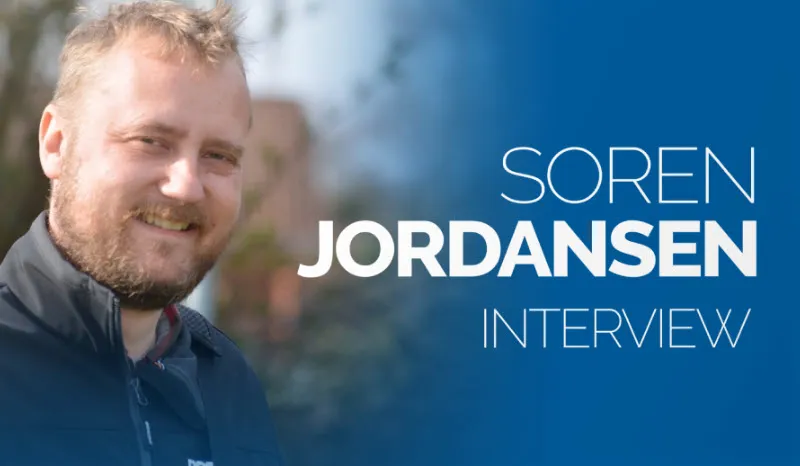
An Interview With Soren Jordansen
Artificial intelligence has made it easier than ever to produce marketing content. You can generate headlines, email campaigns and complete sales pages in minutes, often without having to write a single sentence yourself.
But there's an important difference between producing words and writing something that genuinely persuades people to take action.
AI can produce convincing-looking sales copy, but does it understand your customers, recognise what makes an offer valuable or know when a message simply isn't working?
In this archive interview, released in August 2026, experienced copywriter and information publisher Soren Jordansen, also known as The Copy Viking, shares his perspective on combining traditional copywriting principles with modern AI tools.
The conversation explores his journey from the Danish military into internet marketing, the importance of understanding your audience, how he uses AI in his writing process and why maintaining quality matters more than producing content quickly.
Listen to the Soren Jordansen Interview
From Military Officer to Internet Marketer
Soren Jordansen's introduction to internet marketing came while serving as an officer in the Danish army.
During quieter periods, he noticed that many of his fellow soldiers spent time visiting online gaming and gambling websites. When he discovered that some of those websites offered affiliate programmes, he became interested in how online businesses generated income.
His first attempt involved purchasing a guide to Microsoft FrontPage and building a website.
However, he quickly discovered something that many new entrepreneurs still experience today. Simply creating a website doesn't mean people will visit it.
That led him to investigate traffic generation, affiliate marketing and online business forums, where he began learning from other marketers.
Over time, Soren developed information products, software and marketing resources. He also discovered that he had a particular talent for writing sales copy.
By June 2006, his online business had developed sufficiently for him to resign from the military and concentrate on internet marketing full-time.
He later worked with business partners on successful product launches before moving into corporate marketing and copywriting consultancy.
After approximately ten years working with larger organisations, Soren returned to independent internet marketing in 2026, attracted by the freedom to develop his own products again.
Why Understanding Your Customer Comes Before Writing
One of the strongest lessons in Soren's interview concerns the importance of knowing exactly who you're writing for.
Although he uses modern technology, his approach to copywriting remains grounded in the principles taught by established direct-response marketers such as Gary Halbert, John Carlton and Dan Kennedy.
For Soren, effective copy begins with identifying the intended customer.
What does that person want? What problems are they experiencing? What do they already understand about the subject, and what might prevent them from purchasing?
Those questions influence everything from the headline to the way a product's benefits are explained.
Soren also makes an interesting distinction between writing for his own products and writing for clients.
Much of his most successful copy has been written for products he developed himself.
Because he understands those products and believes in their value, he finds it easier to communicate why someone might want them.
That doesn't mean you must create every product yourself. It means understanding an offer thoroughly before attempting to sell it.
For information publishers, this is particularly relevant when using licensed content or promoting products developed by someone else.
Knowing what a product contains isn't enough. You also need to understand who it serves and why that audience would find it useful.
The FAQ Marketing Logic Conversion pillar explores how clearer offers and more relevant sales messages can help visitors make purchasing decisions.
How Soren Uses AI to Improve His Writing Process
Soren is enthusiastic about artificial intelligence, but his approach is different from simply asking a chatbot to produce a sales letter.
He explains that he uses AI to support his existing process rather than replace it.
In the past, he often began writing with pen and paper. Today, he uses speech-to-text software and AI tools to capture his thoughts, organise ideas and develop working drafts.
Rather than typing everything manually, he can talk through an idea and allow the software to organise the material into something he can work with.
However, the process doesn't end there.
Soren has developed detailed instructions, writing personas and reference material that help his AI tools understand his preferred approach.
He also uses examples of his previous work to guide the output.
The resulting draft becomes part of an ongoing conversation in which he reviews, adjusts and improves the copy.
This allows him to work more quickly while retaining control over the final message.
The important distinction is that Soren already understands what effective copywriting looks like. He can recognise when AI produces something useful and when it misses the point.
Without that experience, someone might accept a polished draft without recognising that it contains weak arguments, vague benefits or unsupported claims.
Why AI Doesn't Automatically Produce Better Sales Copy
Soren raises an important concern about the growing number of products and sales pages created almost entirely by AI.
Although the technology can generate impressive-looking material, he believes some publishers are concentrating too heavily on speed.
It's now possible to produce an information product, create a sales page and prepare promotional emails in a fraction of the time those activities once required.
However, producing everything quickly doesn't guarantee that the finished product is useful.
Soren argues that AI can generate excellent copy when guided properly, but it can also produce poor copy while presenting it as though it's perfectly acceptable.
The challenge is knowing the difference.
For someone writing a sales page, that might involve checking whether the headline makes a clear promise, whether the benefits are relevant and whether the claims are supported by the product.
It also means removing unnecessary language that sounds persuasive but doesn't actually explain anything.
A page filled with enthusiastic claims can still leave potential customers uncertain about what they're purchasing.
The objective should be to help people understand the offer and make an informed decision, rather than simply generate more words.
Mara Glazer discusses the underlying principles of persuasive writing in her interview about direct-response copywriting.
Both interviews reinforce the importance of understanding the reader before concentrating on the wording.
Why AI Makes Experience More Valuable
Another interesting part of the conversation concerns the changing opportunities available to professional copywriters.
Soren believes AI has significantly altered the market for routine writing work.
Tasks that previously provided entry-level opportunities, such as preparing simple product descriptions, can now be completed using AI tools.
However, he doesn't believe that removes the need for experienced copywriters.
Instead, he argues that people who understand marketing and know how to use AI effectively can become more productive.
They can spend less time on repetitive drafting and more time developing ideas, improving offers and making decisions about the message.
This distinction is important for smaller business owners.
You don't necessarily need to become a professional copywriter before using AI to help with your marketing.
However, learning the fundamentals of persuasive communication will make it easier to judge whether the material it produces is useful.
Understanding your customer, explaining benefits clearly and making a relevant offer remain important skills, regardless of which tools you use.
Turning AI-Assisted Writing Into Information Products
Soren also discusses his return to information publishing and the products he's developed around AI-assisted book creation.
One example is Cosy Co-Author, which helps people develop books using AI as part of the writing process.
Rather than presenting the technology as a way to generate an entire finished book with one click, Soren emphasises the value of helping people develop their ideas and participate in the creative process.
He explains that many customers aren't motivated entirely by the prospect of earning money.
Some have always wanted to write a book but haven't known how to begin.
For those customers, seeing their own ideas develop into something tangible can be an important part of the experience.
Soren also discusses Audio Dollars, a project focused on creating shorter audiobooks, and his experiences with software for producing puzzle books.
Interestingly, he found that making a process too automated could remove some of the enjoyment customers gained from creating something themselves.
That observation provides a useful lesson for anyone developing digital products.
Convenience matters, but customers don't always want every activity completed for them.
Sometimes they want guidance, involvement and the satisfaction of producing something themselves.
A successful product should therefore consider not only the final result but also the experience of getting there.
Why Adaptability Matters in Online Business
Throughout the interview, Soren returns to the importance of adapting as technology and markets change.
He has experienced several major shifts during his career, from early affiliate marketing and traffic exchanges to software products, corporate consultancy and AI-assisted publishing.
Some opportunities disappeared, while others developed into entirely new markets.
Soren believes entrepreneurs who become too dependent on one particular method risk being left behind when circumstances change.
However, adapting doesn't necessarily mean abandoning everything you've learned.
His own career demonstrates how established skills can remain valuable even when the tools used to apply them change.
He still relies on the same fundamental copywriting principles, despite using technology that would have been unimaginable when he started.
For online publishers, the lesson is to develop skills that remain useful beyond a particular platform or software product.
Understanding customers, creating worthwhile offers and communicating clearly can help a business adapt when the methods of reaching people change.
What Can Online Business Owners Learn From This Interview?
What stands out about Soren Jordansen's experience is the balance he maintains between traditional marketing knowledge and modern technology.
He's enthusiastic about AI because it allows him to develop ideas and complete work more efficiently. However, he doesn't treat faster production as a substitute for understanding what makes content valuable.
His approach begins with knowing the audience, understanding the product and having a clear idea of what the message needs to achieve.
AI then becomes a tool for helping him work through that process.
For anyone using AI to write sales pages, emails or product descriptions, there's a practical lesson worth applying.
Before asking AI to create the copy, establish who you're speaking to, what you're offering and why someone might find it useful.
Then review the result carefully.
Does it explain the product clearly? Does it address the reader's concerns? Are the claims accurate, and does the message sound like something your business would genuinely say?
The goal isn't to produce more copy in less time. It's to communicate more effectively while making better use of the time available.
Listen to More of the Conversation
Download the Interview Transcript
If you'd prefer to read the conversation or revisit particular points, you can download the complete Soren Jordansen interview transcript.
→ Download the Soren Jordansen Interview Transcript
The transcript preserves the original conversation released in August 2026. References to AI tools, software, publishing platforms and business practices reflect the time of recording and may change.
Want to Explore Persuasive Copywriting Further?
Soren's interview demonstrates why understanding your audience and communicating an offer clearly remain important, even when AI can help produce the words.
Learning the principles behind effective sales messages can make it easier to recognise what works, improve your own writing and make better use of AI-assisted drafts.
If you'd like to explore how persuasive sales letters can be used in an online business, I've got a free resource that introduces another approach to the subject.
→ Discover One Letter From Retirement
Discover More Audio Interviews
The FAQ Marketing Logic Audio Interviews collection brings together conversations with experienced marketers, entrepreneurs and business owners, covering different aspects of building and growing an online business.
Each interview includes an accompanying article and downloadable transcript, allowing you to explore the ideas at your own pace.