
How Do You Build a Successful Digital Product Business?
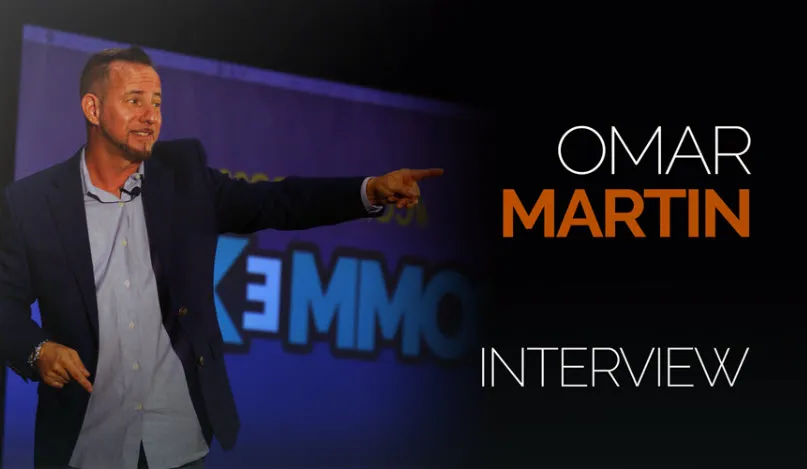
An Interview With Omar Martin
Building an online business can look straightforward from the outside. Create a digital product, put together a sales page, attract some customers and gradually develop a reliable income.
However, the reality is rarely that simple. There are skills to learn, mistakes to overcome and decisions to make about which opportunities are worth pursuing.
For many entrepreneurs, the greatest challenge isn't finding a business idea. It's continuing to make progress when the first few attempts don't produce the results they expected.
In this archive interview, released in March 2021, digital-product creator and entrepreneur Omar Martin shares how he moved from a career in emergency medicine to building an online business with his wife, Melinda.
The conversation explores his relationship with mentor John Thornhill, the mistakes behind his early product launches, the importance of building relationships with other marketers and why recurring income eventually became a priority.
Listen to the Omar Martin Interview
About Omar Martin
Omar Martin originally trained for a career in medicine and worked as a paramedic with the New York City Fire Department.
Although he enjoyed helping people, the demanding nature of emergency medical work gradually made him question whether it was something he wanted to continue indefinitely.
The events of 11 September 2001 became a turning point in his life.
Omar lost his close friend and former working partner, Dave, along with many other colleagues from the fire department. The experience made him reconsider his priorities and eventually led him to leave medicine behind.
He moved to Orlando, Florida, with very little money and began looking for a different way to earn a living.
One of his first opportunities involved door-to-door sales, where he met Melinda, the woman who would later become his wife and business partner.
Their early years together were financially difficult. Omar describes periods of serious hardship, including a time when they had nowhere permanent to live.
Eventually, the couple began exploring ways to build a business online, hoping to create something that offered greater independence and more control over their future.
How John Thornhill Helped Omar Get Started
Omar explains that his introduction to internet marketing came after experimenting with selling unwanted household items on eBay.
He noticed that some sellers appeared to be operating substantial businesses and began researching how they were doing it.
That search eventually led him to John Thornhill.
At the time, John was offering a coaching programme teaching people how to create and sell digital products.
For Omar, the idea was completely different from the career path he'd previously followed. His medical training had involved years of formal education, while internet marketing appeared to offer an opportunity to develop valuable skills through practical experience.
He joined John's coaching programme and committed himself to following the training.
Omar explains that the relationship eventually developed into a close friendship and business partnership. The two went on to collaborate on products and support one another's launches.
What began as a student learning from a more experienced marketer became a lasting professional relationship.
John shares his own journey from factory employment to information publishing in his interview about digital-product creation. Together, the two conversations offer an interesting perspective on how learning from someone with practical experience can help a beginner understand an unfamiliar business model.
Why Omar's First Five Product Launches Failed
One of the most useful sections of the interview concerns Omar's early attempts to launch digital products.
He explains that his first five launches encountered serious difficulties, with each attempt revealing something he hadn't properly understood.
During his first launch, he assumed that creating a product and making it available for sale would be enough to attract customers.
Unfortunately, almost nobody visited the sales page.
He then realised that he needed affiliates and promotional partners to help introduce the product to a wider audience.
However, his next attempt created a different problem. He offered an expensive camera as an affiliate prize without properly calculating whether the expected sales would justify the cost.
The launch didn't generate enough revenue to cover the promotional expense.
Another attempt exposed him to fraudulent affiliate activity because he hadn't established adequate checks before approving promotional partners.
Omar describes how these experiences cost him money, time and considerable frustration.
Rather than abandoning the business, he tried to understand what had gone wrong and improve the next launch.
By the sixth attempt, he'd learned enough about product creation, affiliate recruitment, promotional incentives and managing the sales process to put the different elements together more effectively.
That launch, for a product called Internet Selling for Newbies, generated approximately $450,000 in gross sales, according to Omar.
After affiliate commissions and promotional expenses, he says the couple retained around $180,000.
These are historical figures from Omar's personal experience, not typical results or guarantees of future earnings.
The important lesson is that his eventual success came after several costly mistakes. Each attempt revealed a weakness that needed correcting.
For anyone developing a digital product, this highlights why testing an offer and understanding the costs involved are so important.
The FAQ Marketing Logic Conversion pillar explores practical ways to improve offers, sales pages and the customer journey before investing heavily in promotion.
Why Recurring Income Changed His Approach
Although Omar was pleased with the results of his sixth product launch, he explains that the most valuable part wasn't necessarily the initial sales revenue.
Alongside the main product, he introduced a membership offer priced at $39 per month.
According to Omar, approximately 1,300 customers joined the membership, creating a recurring revenue stream that continued after the original launch.
He explains that, after paying the relevant affiliate commissions, the membership was generating around $30,000 per month at that stage.
The figures are substantial, but the underlying principle is relevant to businesses of different sizes.
A business that depends entirely on individual product launches may experience periods of strong sales followed by quieter months.
Recurring income can provide a more predictable foundation, provided customers continue receiving enough value to justify their payments.
For an information publisher, this might involve a membership providing regular training, a subscription resource library or an ongoing service that addresses a continuing customer need.
However, recurring revenue also creates responsibilities. Members need a clear reason to remain subscribed, and the business must be able to deliver what it promises consistently.
Omar's experience demonstrates why he eventually began looking beyond one-off product launches towards business models that could generate more consistent income.
Why Relationships Matter More Than Marketing Software
Another particularly useful point concerns Omar's approach to choosing marketing tools.
He explains that beginners can become distracted by decisions about website platforms, page builders and other software.
Although these tools are necessary, he doesn't believe they are the main reason a business succeeds.
Instead, he places greater importance on the decisions entrepreneurs make, the actions they take and the relationships they develop.
Omar describes working with a group of fellow marketers that included John Thornhill, David Nicholson and Michael Cheney.
The group collaborated on products, discussed upcoming launches and helped promote one another's offers.
These relationships allowed members to share knowledge, coordinate activities and reach audiences they might otherwise have struggled to access.
For smaller publishers, this doesn't mean immediately organising a large affiliate network.
It might begin with developing relationships with people serving similar audiences, exchanging useful ideas or collaborating on a resource that benefits both businesses.
Rob Cuesta discusses the wider opportunities available through business partnerships in his interview about joint ventures.
Omar's central message is that the software you use matters less than understanding your customers, creating worthwhile products and developing relationships that help the business move forward.
Why He Would Build an Audience Before Creating Products
When asked what he would do differently if starting again, Omar gives an interesting answer.
Rather than immediately concentrating on product launches, he says he would begin by creating useful content and developing an audience.
His reasoning is that many beginners become so focused on selling something that they overlook the importance of giving people a reason to pay attention in the first place.
Omar recommends providing valuable information without always requiring visitors to subscribe or purchase something.
Over time, that content can help establish trust and attract people who are genuinely interested in the subject.
Once an audience begins developing, the publisher has a better opportunity to understand what people need and which products might help them.
It's an approach particularly suited to information publishing.
A collection of helpful articles can answer common questions, demonstrate expertise and attract readers who may eventually become subscribers or customers.
The FAQ Marketing Logic Traffic pillar explores how useful, well-organised content can help people discover a website and find answers to their questions.
Omar also emphasises that an email list should develop from a genuine audience relationship rather than simply becoming a collection of addresses.
The goal is to attract people who value what you publish, not merely increase subscriber numbers.
Building a Business Around Different Strengths
Omar also discusses the working relationship he developed with Melinda.
Although he initially handled much of the online marketing himself, Melinda gradually became more involved as the business grew.
He describes himself as the creative person, concentrating on ideas, products and marketing strategies.
Melinda, meanwhile, brought stronger organisational and operational skills to the business.
She eventually became the company's CEO, managing many of the activities required to turn Omar's ideas into functioning products and processes.
Their experience illustrates an important principle about business growth.
The skills needed to create a successful product aren't necessarily the same as those required to manage an expanding company.
Someone might be excellent at developing ideas but less comfortable organising projects, managing schedules or coordinating other people.
Recognising those differences can help business owners decide where they need support.
The FAQ Marketing Logic Systems pillar covers practical ways to organise recurring activities and establish processes that make a growing business easier to manage.
Turning Live Training Into Additional Products
Towards the end of the interview, Omar describes another approach the couple had been developing.
They began running affordable, one-day online workshops covering specific internet marketing skills.
Participants could attend a structured training session and work through a subject with guidance from Omar.
The sessions were also recorded, allowing the training material to be developed into products that could be offered afterwards.
This gave the business two opportunities from the same work.
The live event provided immediate value to attendees, while the recording became an additional resource for people who couldn't attend.
For information publishers, it's a useful example of how content can serve more than one purpose.
A live workshop might become a recorded course, a collection of written lessons or a supporting workbook.
The important consideration is that each version should be organised appropriately for the people using it.
A recording alone isn't automatically a finished course, but it can provide much of the material needed to create one.
What Can Online Business Owners Learn From This Interview?
What stands out about Omar Martin's story is the amount of persistence involved in building his business.
His transition from emergency medicine wasn't straightforward, and his early years in internet marketing included financial difficulties, unsuccessful launches and mistakes that proved expensive.
However, he continued learning and gradually developed a better understanding of product creation, promotion and customer relationships.
His experience also demonstrates why building an online business involves more than choosing the right software or finding a promising product idea.
The relationships you develop, the value you provide and the decisions you make when things go wrong can have a much greater influence on long-term progress.
For someone starting an information publishing business, there are several practical lessons worth considering.
Begin by developing useful skills and understanding your audience. Create products that solve genuine problems, establish realistic expectations and avoid committing money to promotional activities you don't fully understand.
As the business develops, consider whether recurring income, partnerships or more effective systems could make it easier to maintain.
Perhaps most importantly, remember that the first attempt doesn't have to determine the eventual outcome.
Omar's sixth product launch succeeded because he'd learned from the five that came before it.
Listen to More of the Conversation
Download the Interview Transcript
If you'd prefer to read the conversation or revisit particular points, you can download the complete Omar Martin interview transcript.
→ Download the Omar Martin Interview Transcript
The transcript preserves the original archive conversation released in March 2021. References to websites, products, software and business practices reflect that period and may no longer be current.
Want to Explore Building an Information Publishing Business?
Omar's experience demonstrates how creating and selling digital products can become the foundation of an online business.
However, developing every product from scratch isn't the only approach available.
Product licensing allows you to obtain appropriate rights to existing material and develop products around content you haven't created entirely yourself.
If you'd like to understand how this business model works, I've got a free resource that introduces the approach and explains the opportunities involved.
→ Discover How Product Licensing Works
Discover More Audio Interviews
The FAQ Marketing Logic Audio Interviews collection brings together conversations with experienced marketers, entrepreneurs and business owners, covering different aspects of building and growing an online business.
Each interview includes an accompanying article and downloadable transcript, allowing you to explore the ideas at your own pace.