
How Do You Turn a Presentation Into More Sales?
An Interview With Kim Walsh Phillips
Giving a presentation can be a useful way to introduce your business to potential customers. It allows you to demonstrate your knowledge, explain what you do and establish a connection with people who might benefit from your products or services.
However, there's an important difference between delivering a presentation that people enjoy and delivering one that encourages them to take action.
An audience might applaud, compliment your speaking skills and tell you how much they enjoyed the experience. But if nobody takes the next step, the presentation may have done very little to help your business grow.
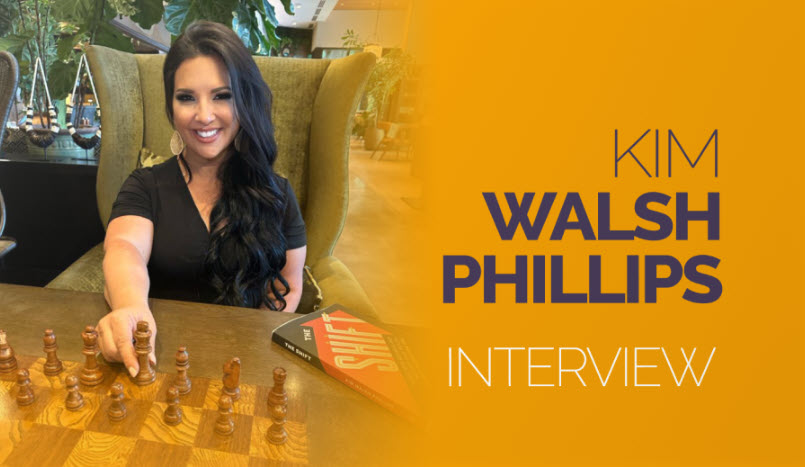
In this archive interview, released in June 2026, entrepreneur, author and speaker Kim Walsh Phillips explains how she developed a structured approach to turning presentations into paying customers.
The conversation explores her Million Dollar Talk framework, why storytelling needs a purpose, how to introduce an offer without making people uncomfortable and the importance of testing what actually works.
Listen to the Kim Walsh Phillips Interview
About Kim Walsh Phillips
Kim Walsh Phillips has enjoyed public speaking since childhood. She participated in theatre, joined her school's speech team and became student council president, developing an early enthusiasm for performing in front of an audience.
As her business career developed, she began accepting invitations to speak at events. She enjoyed the experience and hoped that people attending her presentations would eventually become customers.
Sometimes that happened. Someone would approach her afterwards, explain how much they'd enjoyed the presentation and ask about working together.
Unfortunately, it wasn't consistent.
Kim explains that her business was experiencing serious financial difficulties during those early years. At one point, she even had to pawn her engagement ring to help meet payroll.
She realised that relying on people to approach her after a presentation wasn't a reliable way to generate business.
Instead, she began studying how successful speakers structured presentations that led naturally towards an offer.
That decision eventually changed the way she approached public speaking.
Why Entertaining an Audience Isn't Enough
One of Kim's earliest breakthroughs came when she began looking at presentations as part of a wider sales process.
Previously, her goal had been to deliver an entertaining talk and hope that people would recognise the value of working with her.
After studying successful presentations and developing her own approach, she began introducing a clear invitation for audience members to take the next step.
The results surprised her.
Kim recalls presenting to a room containing just 32 people, with 28 accepting her offer. According to her account, the resulting profit was enough to repay approximately $55,000 of debt and provide additional money to develop the business.
These are historical results from Kim's personal experience, not typical outcomes or guarantees of future sales.
What matters is the principle behind the change.
Rather than leaving the audience to work out what to do afterwards, Kim made the next step part of the presentation itself.
For online business owners, this is equally relevant to webinars, product demonstrations and sales videos.
A presentation might explain a subject brilliantly, but visitors still need to understand what action they can take if they want further help.
The FAQ Marketing Logic Conversion pillar explores how clearer offers and calls to action can help people move from interest towards a purchasing decision.
How the Million Dollar Talk Framework Works
Kim's approach is built around a sequence that connects the audience's current situation with the result they're hoping to achieve.
She begins with a story that explains what life or business looked like before discovering a solution, what happened during the process and what changed afterwards.
The purpose is to help listeners recognise a situation similar to their own.
Next, she introduces a simple four-step framework that explains how the desired result can be achieved.
Rather than overwhelming the audience with everything she knows, she gives them a structure they can understand and remember.
The presentation then moves towards an invitation to take the next step.
Kim believes this transition should feel like a natural continuation of the information already shared, rather than an unexpected sales pitch.
One technique she describes is telling the audience near the beginning that an offer will be introduced later.
When the time comes, she asks whether they've received enough value to hear the invitation.
This gives listeners advance notice and allows them to decide whether they're interested.
The final element involves providing a reason to act promptly.
Kim discusses using time-sensitive bonuses to encourage interested audience members to make a decision. Any such incentive should be genuine, clearly explained and not designed to pressure people into purchasing something unsuitable.
The underlying lesson is that a presentation works best when the information, examples and offer all support the same outcome.
Why Storytelling Needs a Clear Purpose
Kim is a strong advocate of storytelling, but she makes an important distinction between sharing an interesting experience and using a story to explain something useful.
She recommends including stories throughout a presentation, particularly when introducing an idea or demonstrating how a particular step works.
However, every story should relate directly to the subject and the audience.
An entertaining anecdote might generate laughter, but if it has nothing to do with the problem being discussed, it can distract from the message.
Kim explains that the objective isn't simply to perform. It's to help people recognise how the information applies to their own circumstances.
For example, someone presenting a course about email marketing might describe how they struggled to attract subscribers, what they changed and how those changes affected their results.
That experience becomes useful when it helps the audience understand a principle they can apply themselves.
The same approach can strengthen written marketing.
A sales page doesn't necessarily need more claims or longer explanations. Sometimes a relevant example can communicate the value of an offer more clearly.
Chad Kirby explores the importance of audience connection in his interview about storytelling and persuasive communication. Both conversations reinforce the idea that stories should support the message rather than become the message.
Why Inspiration Should Lead Somewhere
Another interesting point concerns presentations designed primarily to inspire an audience.
Kim believes that leaving people feeling motivated without giving them a practical way forward can be a missed opportunity.
She describes attending a presentation that raised difficult personal emotions but offered no clear guidance about what listeners could do afterwards.
For Kim, a worthwhile presentation should connect the problem being discussed with a realistic next step.
That doesn't mean every presentation needs to end with a paid offer.
Sometimes the appropriate next step might be a practical exercise, a free resource or an invitation to explore the subject further.
However, when a relevant product or service can genuinely help someone, Kim believes the speaker shouldn't avoid mentioning it simply because they're uncomfortable selling.
For information publishers, this highlights the importance of aligning educational content with the products or resources offered afterwards.
If an article explains how to improve email engagement, the next step should relate to email marketing rather than an unrelated business opportunity.
The connection needs to make sense from the reader's perspective.
Why Kim Treats Every Presentation as an Experiment
One of the most practical lessons in the interview concerns Kim's attitude towards testing.
When she first began changing her presentations, she worried about whether the audience would respond positively.
Rather than treating every result as a personal success or failure, she decided to approach each presentation with curiosity.
She began experimenting with different stories, explanations, transitions and offers.
If something didn't work, she could examine the response and make adjustments.
Kim describes approaching presentations almost like a scientist, using audience behaviour to understand what was effective.
This is a useful approach for online marketing because business owners can become personally attached to their sales messages.
A headline might sound excellent to the person who wrote it, yet fail to attract attention. An offer might seem compelling but leave potential customers confused.
Testing provides an opportunity to learn rather than simply guess.
The important point is to make changes deliberately and evaluate whether they improve the result.
How to Practise Before Speaking to a Larger Audience
Kim also offers practical advice for people who aren't comfortable speaking publicly.
She suggests beginning with a personal story that follows a simple sequence: what things were like before, what you discovered, what action you took and what changed afterwards.
Once you've written the story, practise explaining it aloud.
You could record a short video, review how clearly the message comes across and make improvements.
Kim also suggests looking for opportunities to speak to smaller groups, including local business organisations or community meetings.
For someone running an online business, the same process could begin with a short educational video or a recorded presentation explaining a particular problem.
The objective isn't to become a polished professional speaker immediately.
It's to become more comfortable explaining your ideas in a way that other people can understand.
What Can Online Business Owners Learn From This Interview?
What stands out about Kim Walsh Phillips' approach is her belief that a persuasive presentation needs a clear purpose.
Entertaining people and demonstrating expertise can help establish interest, but neither automatically leads to a sale.
The presentation also needs to explain the problem, demonstrate a useful approach and give interested people an appropriate opportunity to take the next step.
Her framework offers several lessons for anyone creating webinars, sales videos or educational presentations.
Start with a story your audience can relate to, explain the solution through a manageable number of steps and make sure the offer connects naturally with what you've taught.
Then pay attention to the response.
If people enjoy the presentation but don't take action, consider whether the next step is sufficiently clear and relevant.
The aim isn't to pressure an audience into buying. It's to make the value of your offer understandable and give interested people a clear opportunity to respond.
Listen to More of the Conversation
Download the Interview Transcript
If you'd prefer to read the conversation or revisit Kim's advice on presentations, storytelling and sales, you can download the complete interview transcript.
→ Download the Kim Walsh Phillips Interview Transcript
The transcript preserves the original archive conversation released in June 2026. References to business results, marketing methods and presentation techniques reflect the time of recording and should not be treated as guarantees of future performance.
Want to Make Your Sales Messages More Persuasive?
Kim's interview demonstrates why effective selling depends on connecting a clear message with an appropriate offer.
That principle applies whether you're speaking to an audience, presenting a webinar or writing a sales letter.
If you'd like to explore another approach to communicating an offer and encouraging readers to take action, I've got a free resource that introduces the principles behind persuasive sales letters.
→ Discover One Letter From Retirement
Discover More Audio Interviews
The FAQ Marketing Logic Audio Interviews collection brings together conversations with experienced marketers, entrepreneurs and business owners, covering different aspects of building and growing an online business.
Each interview includes an accompanying article and downloadable transcript, allowing you to explore the ideas at your own pace.