How Often Should You Send Emails?
TL;DR
Send emails consistently enough to stay relevant, not aggressively enough to cause fatigue.
Most businesses under-send.
Consistency beats bursts.
IN SHORT
In Marketing Logic, the optimal email frequency defined as the 'Highest Sustainable Value'—the maximum number of emails you can send without a drop in engagement or clarity.
Start weekly.
Increase only when:
You have something useful to say
Your audience expects to hear from you
Your engagement remains stable
Inconsistent silence damages trust more than frequent communication.
WHY THIS WORKS
Email operates on memory and momentum.
If you disappear:
Open rates drop
Recognition fades
Trust weakens
Sales become harder
Frequency maintains relationship temperature.
Cause → You show up regularly.
Effect → Your audience expects you.
Result → Conversions feel natural, not abrupt.
Email is not a campaign tool.
It is a rhythm.
REAL TALK
Most businesses send:
Nothing for three weeks
Then five emails in four days during a launch
That’s not strategy.
That’s panic.
If you only email when you want money, people notice.
And they disengage.
What Happens If You Email Too Little?
Your list goes cold
Open rates decline
Spam filtering increases
Sales resistance rises
Your audience forgets why they joined.
You lose positioning.
What Happens If You Email Too Much?
Fatigue increases
Unsubscribes rise
Quality drops
Brand perception suffers
Frequency without value creates noise.
Value without consistency creates invisibility.
Balance both.
Recommended Frequency by Business Stage
Early stage (building authority)
→ 1 email per week
If you are still figuring out your model, focus on one high-value email per week. (See: How Do I Choose the Right Online Business Model?)
Mid stage (consistent content engine)
→ 2–3 per week
Launch windows
→ Increased short-term frequency (clearly framed)
But never disappear outside launch periods.
COFFEE CUP TIP ☕
If you can’t think of what to send weekly, the issue isn’t frequency.
It’s clarity of message.
Fix that first.
(See: How to Write Clear Emails — sibling article)
STORY TIME
A client reduced sending from 3 emails per week to 1 per month.
They felt “less annoying.”
Revenue dropped 38% in two months.
Nothing else changed.
They weren’t annoying.
They were invisible.
We restored weekly rhythm.
Revenue stabilised.
Consistency restored trust.
The logic here is simple: Out of sight is out of mind, and out of mind is out of the budget.
FAQ QUICK FIX
If you’re unsure what frequency to choose:
1. Commit to weekly for 90 days
2. Track open rate trends
3. Monitor unsubscribe spikes
4. Review click consistency
5. Only increase when stable
Do not adjust based on emotion.
Adjust based on data.
QUICK RECAP
Consistency builds trust
Silence weakens positioning
Over-emailing damages value
Most businesses under-send
Weekly is a stable baseline
COMMON MISTAKES
Mistake: Only emailing during launches
Fix: Maintain weekly rhythm year-round
Mistake: Sending daily without value
Fix: Match frequency to quality capacity
Mistake: Copying another creator’s schedule
Fix: Align frequency to your business model
FAQ
Q: Is daily emailing too much?
Not if the content is strong and expected. It requires discipline.
Q: Will people unsubscribe if I email weekly?
Yes. Some will. That is healthy list hygiene.
Q: Should frequency change during launches?
Yes, temporarily — but clearly framed and followed by normal rhythm.
Q: Does higher frequency increase revenue?
Usually, if value and positioning are strong.
TRY THIS TODAY
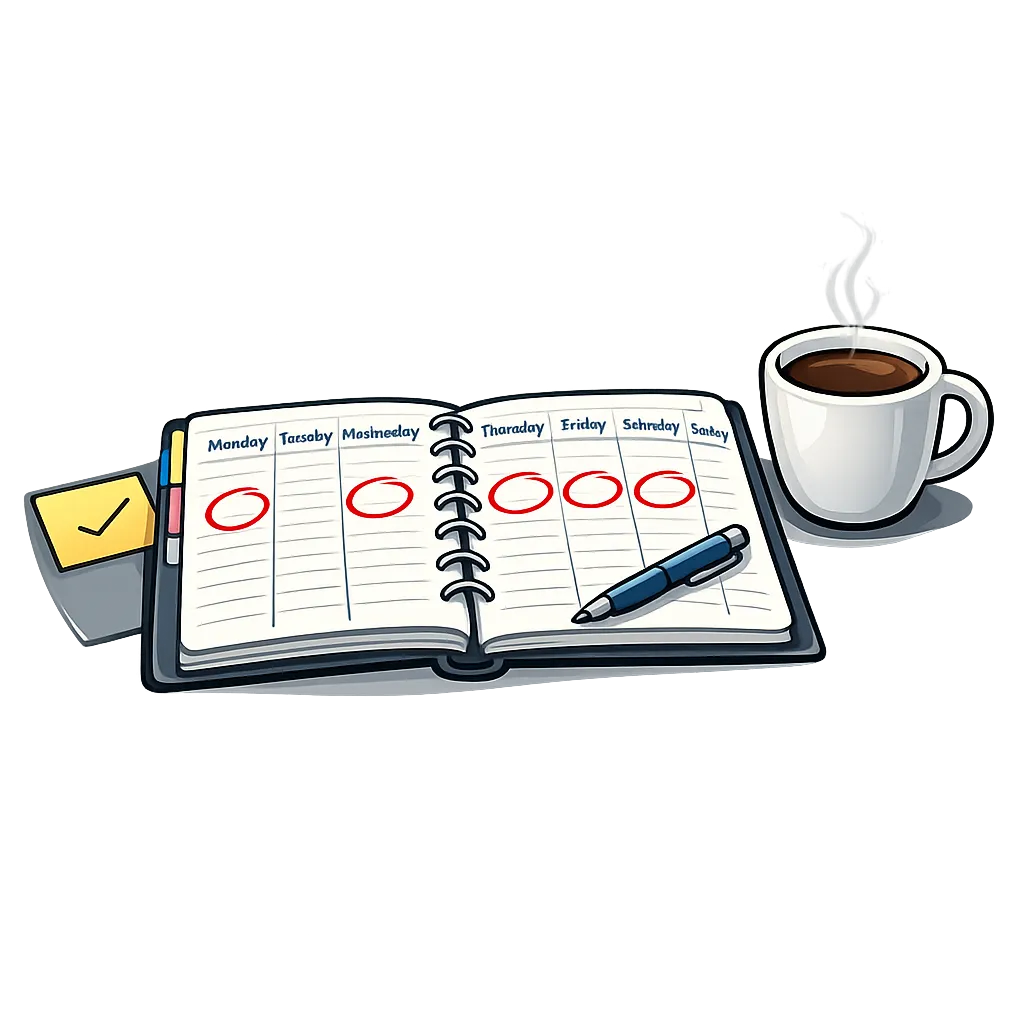
Open your calendar.
Schedule one email per week for the next 8 weeks.
Lock it in.
Consistency first. Optimisation later.
NEXT STEP
Frequency is pointless if nobody clicks.
Read next:
How to Increase Email Engagement and Click-Through Rates
RELATED ARTICLES
→ How Can I Make My Emails Clearer and More Direct? (Without Sounding Harsh?)
→ How Long Should Marketing Emails Be? (Short vs Long Explained)
→ How to Structure Email CTAs for Higher Conversions
If you're starting a business, return to the Business pillar to strengthen your offer foundation.