
How Can Outsourcing Help You Grow Your Online Business?
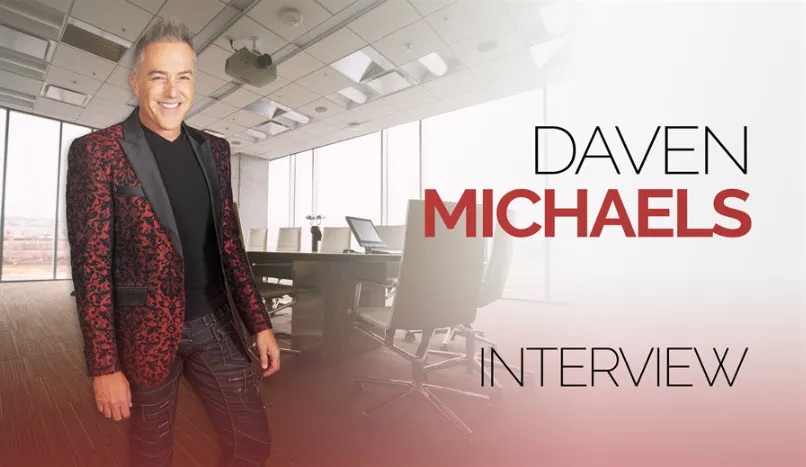
An Interview With Daven Michaels
Running your own online business offers the opportunity to work independently, make your own decisions and potentially create a more flexible lifestyle. However, that freedom can quickly disappear when you become responsible for every task the business requires.
Between creating products, answering customer enquiries, managing marketing and handling administration, it's easy to reach a point where there simply aren't enough hours in the day.
Outsourcing offers one possible solution, but knowing when to delegate, which tasks to hand over and how to manage outside help can be difficult, particularly when you're working with a limited budget.
In this archive interview, released in January 2021, entrepreneur and outsourcing specialist Daven Michaels shares his journey from the entertainment industry to founding 123Employee, a company providing outsourced support to businesses around the world.
The conversation explores why entrepreneurs struggle to let go of everyday tasks, how delegation can support business growth and why building a successful company should ultimately provide more freedom rather than less.
Listen to the Daven Michaels Interview
About Daven Michaels
Daven Michaels began his entrepreneurial career at just fifteen years old, designing clothing for music groups during the early 1980s.
At the time, many of the bands he worked with were performing in garages and small venues. However, the arrival of MTV transformed the music industry, and several of those groups quickly became internationally successful.
Daven found himself working with major performers, including Prince, Madonna, Cyndi Lauper and Duran Duran.
His career subsequently expanded into telecommunications, electronic music events, recording and music production. He also became involved in television production before eventually discovering an opportunity in outsourcing.
That opportunity developed into 123Employee, a company providing virtual assistants, customer support and business process outsourcing services.
During the interview, Daven explains that the company began with a small team of around ten employees and had grown to nearly a thousand by the time of the conversation.
His experience across several industries provides an interesting perspective on entrepreneurship, particularly the importance of recognising opportunities and adapting when circumstances change.
Why Entrepreneurs End Up Doing Everything Themselves
One of the most useful observations Daven makes concerns the way entrepreneurs approach their daily work.
He explains that modern technology allows a business owner to handle almost every activity personally. You can build your own website, create marketing materials, answer customer enquiries, manage bookkeeping and deliver products without employing anyone.
However, being able to do everything doesn't necessarily mean you should.
Every hour spent completing routine administration is an hour that can't be spent improving products, attracting customers or developing the business.
This becomes particularly important as the workload increases. Tasks that were manageable when the business was small can eventually consume most of the owner's working day.
Daven believes entrepreneurs need to recognise the difference between activities that genuinely require their personal attention and those that someone else could handle effectively.
For an information publisher, that might mean retaining responsibility for product strategy and editorial decisions while getting assistance with formatting documents, uploading content or managing repetitive administrative work.
The FAQ Marketing Logic Systems pillar explores how to identify repetitive activities and establish manageable processes before introducing additional complexity.
Why Outsourcing Wasn't an Immediate Success
Although 123Employee eventually became an established outsourcing business, Daven explains that its early years were challenging.
When the company began offering services to entrepreneurs, outsourcing was already common among larger organisations. However, many smaller businesses weren't familiar with the idea of using remote workers.
Daven recognised that entrepreneurs needed help, but they didn't necessarily understand outsourcing well enough to want the service.
He also encountered resistance to the idea of moving work overseas.
Rather than abandoning the business, he decided that potential customers needed to understand how outsourcing could help them.
This led to an educational approach to marketing.
Daven began writing books, developing information products, delivering webinars and speaking at events around the world. Instead of simply promoting outsourcing services, he explained the problems they could solve.
As more entrepreneurs became familiar with remote working and virtual assistance, the market began to develop.
There's a useful lesson here for anyone selling a product or service that customers don't immediately understand.
Sometimes the problem isn't that the offer lacks value. It's that potential customers haven't yet recognised why they need it.
Providing useful explanations, examples and practical guidance can help people make informed decisions.
Bill Glazer discusses the importance of guiding potential customers through a marketing process in his interview about multi-step marketing.
What Should You Outsource First?
Perhaps the most practical advice in the interview concerns deciding which activities to delegate.
It's tempting to begin by handing over the jobs you dislike, particularly repetitive administration and other time-consuming tasks.
However, Daven recommends considering something else first.
He suggests concentrating initially on income-generating activities, which he calls IGAs.
These are tasks that directly contribute to bringing revenue into the business.
For example, an online publisher might benefit from help preparing promotional materials, managing customer follow-up or supporting activities that bring qualified visitors to an existing offer.
Daven's reasoning is that outsourcing still involves an expense, even when remote assistance costs less than employing someone locally.
If the delegated work contributes to generating additional income, it may become easier to justify that expense.
Once those activities are working effectively, the business can begin outsourcing tasks that primarily save the owner's time.
Of course, this doesn't mean every marketing task should immediately be handed to someone else. The work needs to be clearly defined, affordable and suitable for delegation.
For a small business, the starting point might be a few hours of specialist assistance rather than employing someone on a permanent basis.
The important thing is to understand what you're trying to achieve before deciding who should do the work.
Why Systems Matter as Much as Delegation
Daven explains that, during the early years of 123Employee, he spent considerable time travelling to the Philippines, where much of the company's work was carried out.
As his family circumstances changed, he realised that constantly travelling wasn't going to provide the lifestyle he wanted.
He needed a business that could operate effectively without requiring his physical presence.
Over time, he developed a management structure and established systems that allowed the company to operate remotely.
By the time of the interview, he was still closely involved in the business but no longer needed to supervise every activity personally.
This distinction is important.
Delegation doesn't mean abandoning responsibility for what happens in your business. It means establishing clear expectations and allowing capable people to complete their work without unnecessary interference.
For smaller online businesses, this might begin with documenting how recurring tasks are completed.
A straightforward process for preparing blog posts, handling customer enquiries or delivering digital products can make it much easier to involve someone else later.
Without those processes, outsourcing can simply transfer confusion from one person to another.
How One Employee Helped Build an International Business
One of the most memorable stories in the interview concerns a young employee named Carl.
Daven explains that Carl was among the earliest people involved in developing the outsourcing business.
While working for the company, Carl was also studying and supporting members of his family. Daven provided performance bonuses that helped him continue his education and assist his relatives.
Eventually, Carl completed his studies and moved to the United States, where he became a physical therapist.
The two remained friends.
Years later, Carl attended one of Daven's business events, unaware that his contribution to the company's early development had become an important part of its history.
Daven surprised him by explaining to the audience how much the business had grown and how many people had benefited from the opportunity that began with their working relationship.
The story illustrates something that can easily be overlooked when discussing business growth.
A successful business can affect more people than its customers and owners. Employees, contractors, suppliers and their families may also benefit from the opportunities it creates.
For Daven, this became an important part of why he continued developing the company.
Building a Business That Gives You More Freedom
Towards the end of the interview, Daven discusses the lifestyle he had gradually created through his business activities.
After decades of entrepreneurship, he had reached a position where he could concentrate more on work he genuinely enjoyed, particularly speaking, writing and helping other business owners.
He also talks about living in Puerto Rico and appreciating the opportunities that came with having greater flexibility.
However, he acknowledges that reaching this stage took many years.
His early career involved long working hours, extensive travel and the difficulties that come with developing new businesses.
By January 2021, one of his personal goals was to slow down, spend more time with his family and enjoy what he'd already built.
It's an important reminder that business growth shouldn't automatically mean accepting more work and responsibility.
Sometimes the most valuable improvement is creating a business that can operate more effectively without demanding constant attention.
Kevin Fahey shares a similar perspective in his interview about building a sustainable information publishing business, particularly the importance of maintaining consistent results without continually increasing the workload.
What Can Online Business Owners Learn From This Interview?
What stands out about Daven Michaels' experience is that outsourcing wasn't simply a way to reduce his workload. It became the foundation of a business designed to help other entrepreneurs reclaim their time.
His interview also highlights the importance of recognising when doing everything yourself is preventing progress.
For someone starting an online business, handling most tasks personally may be unavoidable. However, as the business develops, it's worth considering which activities genuinely require your expertise and which could eventually be delegated.
Daven's recommendation to prioritise income-generating activities provides a useful starting point, particularly when funds are limited.
There's also an important lesson in his approach to marketing. When customers didn't understand outsourcing, he used books, webinars and educational content to explain its benefits rather than relying entirely on direct promotion.
Ultimately, the goal isn't to build the largest possible team or outsource every responsibility.
It's to create a business that serves customers effectively, generates sustainable income and leaves you with time to enjoy the benefits of your work.
Listen to More of the Conversation
Download the Interview Transcript
If you'd prefer to read the conversation or revisit particular points, you can download the complete Daven Michaels interview transcript.
→ Download the Daven Michaels Interview Transcript
The transcript preserves the original archive conversation released in January 2021. References to businesses, services and working practices reflect that period and may no longer be current.
Want to Explore Building a More Profitable Online Business?
Daven's experience demonstrates why having the right systems, marketing processes and support can make such a difference as a business develops.
However, you don't need a large team or complicated organisation to start making progress. Often, the most useful approach is to concentrate on activities that contribute to revenue and gradually improve the way the business operates.
If you'd like to explore further ideas for developing and growing an online business, I've got a free resource that introduces practical approaches to building income online.
→ Discover Serious About Six Figures
Discover More Audio Interviews
The FAQ Marketing Logic Audio Interviews collection brings together conversations with experienced marketers, entrepreneurs and business owners, covering different aspects of building and growing an online business.
Each interview includes an accompanying article and downloadable transcript, allowing you to explore the ideas at your own pace.