How Can You Turn Your Knowledge Into a Published Book?
August 2025
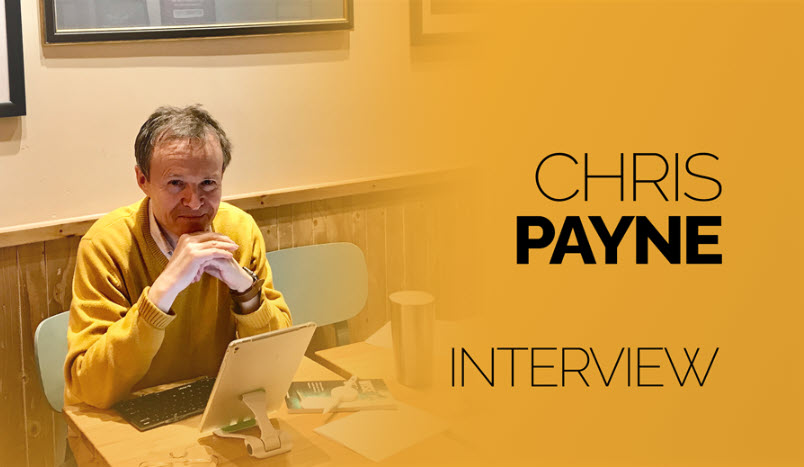
An Interview With Chris Payne
You don't necessarily need to be a professional writer to publish a book. If you have useful knowledge, practical experience or a story that could help other people, you may already have the foundations of something worth publishing.
The difficulty is often knowing where to begin. Turning your ideas into a structured manuscript, preparing the finished book and making it available to readers can seem like a complicated process.
In this archive interview, publishing specialist Chris Payne explains how he helps people transform their knowledge into books, how Amazon has simplified self-publishing and why artificial intelligence can be useful when handled carefully.
Listen to the Chris Payne Interview
From Direct Marketing to Book Publishing
Chris began his career in magazine publishing before building LifeTools, a mail-order business selling personal development products.
Through that business, he developed extensive experience writing long-form sales letters and marketing information products. He discovered how important it was to understand the reader and communicate the value of an offer clearly.
Those skills eventually became central to his publishing work.
After moving into consultancy, Chris began helping entrepreneurs improve their marketing and develop books based on their experience. At the time of the interview, he had been involved in producing more than 300 books.
His experience demonstrates that publishing isn't simply about putting words onto pages. It's about presenting information in a way that readers can understand and use.
How Do You Turn Your Knowledge Into a Book?
One of Chris's most useful suggestions is to begin with questions rather than a blank page.
Imagine sitting down with someone who knows very little about your subject. What would they ask first? Which explanations would they need before moving on to more complicated ideas?
By answering those questions, you can begin collecting the material for a book that follows the reader's learning process.
Chris suggests recording conversations or speaking your ideas aloud, then organising the resulting material into a logical structure.
This approach can be particularly helpful for people who find speaking easier than writing.
It also connects with the broader idea of turning your skills into a sellable offer. Knowledge that feels ordinary to you may be valuable to someone encountering the subject for the first time.
Using AI Without Losing Your Own Voice
Chris is enthusiastic about using AI to help with book creation, particularly for organising material, developing drafts and improving written explanations.
However, he warns that poorly instructed AI can produce disappointing results.
He believes authors need to contribute their own experiences, examples and stories. Those details make a book more useful and distinctive, while giving readers something beyond generic information.
AI-generated material also needs checking, especially where it includes facts, research or references.
The important lesson is to use AI as a tool for developing your knowledge, not as a substitute for understanding your subject.
Chris also explains how Amazon's publishing system can make books available in Kindle and paperback formats without authors having to maintain their own stock.
What Can Online Business Owners Learn?
Chris's interview offers a useful reminder that creating an information product doesn't always mean starting with a lengthy writing project.
You can begin by identifying questions people regularly ask, recording your answers and developing those explanations into a structured resource.
The next step is to consider whether the finished material addresses a genuine need.
A useful book begins with understanding the reader, not simply filling pages with information.
Listen to More of the Conversation
Download the Interview Transcript
If you'd prefer to read the conversation or revisit Chris's publishing advice, the complete transcript is available below.
→ Download the Chris Payne Interview
Want to Explore Another Way to Sell Information Products?
Creating your own book is one way to turn knowledge into a product, but it isn't the only approach.
Product licensing offers an alternative for people interested in selling information products without developing every piece of material themselves.
If you'd like to explore that option, Nick James has a resource explaining how product licensing works.
→ Discover How Product Licensing Works
Related Articles
→ How Do I Turn Skills Into a Sellable Offer?
→ Should I Start With Services or Digital Products?
→ How Do I Use AI in My Daily Workflow?
You can also explore more conversations in the FAQ Marketing Logic Audio Interview Collection.