
How Do You Persuade an Audience Without Relying on Your Credentials?
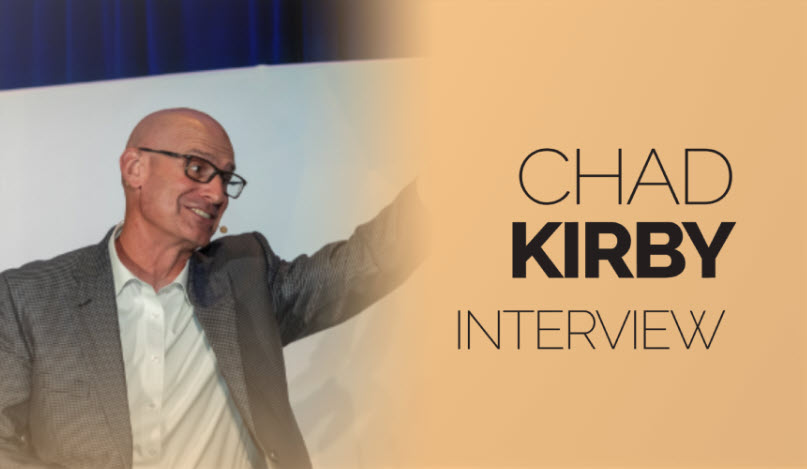
Chad Kirby Interview
Being knowledgeable about a subject doesn't automatically make you persuasive. You can have years of experience, impressive qualifications and a genuinely useful message, yet still struggle to convince people to listen or take action.
That's something speaker and communication coach Chad Kirby understands particularly well. Having spent years speaking to audiences and helping others improve their presentations, he's learned that effective communication has less to do with establishing your importance and more to do with helping people recognise what's important to them.
In this archive interview, Chad explores the power of storytelling, the mistakes speakers make when trying to establish credibility, and why simplicity can be far more persuasive than an impressive presentation.
Listen to the Chad Kirby Interview
About Chad Kirby
Chad Kirby is a speaker, educator and communication coach who became widely known through his work with Infusionsoft, where he developed his experience speaking from the stage and connecting with business audiences.
His work has included sharing stages with well-known personalities and helping other speakers improve their ability to communicate, persuade and inspire action.
He is also the author of Speak and Get What You Want, a book exploring how effective communication can help people achieve their goals by helping others achieve theirs.
Why Your Credentials Aren't Always Your Greatest Advantage
One of the most interesting stories Chad shares concerns an event where he was scheduled to speak between American radio personality Dave Ramsey and former US President George W. Bush.
The audience had originally expected the CEO of Infusionsoft, but Chad was appearing in his place. Surrounded by two recognisable names, he knew he couldn't rely on reputation alone to hold people's attention.
Instead, he concentrated on something much more useful: understanding the problems his audience wanted to solve.
His experience illustrates a valuable lesson for anyone marketing a business. Potential customers aren't necessarily interested in how successful you are, how many qualifications you hold or how long you've been operating. They're interested in whether you understand their situation and can help them improve it.
Chad describes the danger of concentrating too heavily on personal achievements as the credential trap. When a presentation becomes a lengthy account of the speaker's accomplishments, the audience can struggle to see how any of it relates to them.
The same problem can appear on websites and sales pages. A business might devote considerable space to explaining its history while giving visitors very little information about how its products or services could help them.
If you're reviewing your own marketing, our Conversion pillar explores how clearer communication can help visitors understand an offer and decide what to do next.
Storytelling Should Help People Understand Something
Chad believes storytelling is a skill that can be developed rather than a talent people are simply born with.
However, he makes an important distinction between telling an entertaining story and telling one that helps an audience understand a useful principle.
A story needs a purpose. It should connect naturally with the lesson being taught and help the listener recognise something relevant to their own experience.
Without that connection, even an interesting story can become a distraction.
For online business owners, this is particularly relevant when writing emails, creating sales pages or explaining digital products. A personal experience can make a message more engaging, but the reader still needs to understand why that experience matters to them.
For example, rather than simply describing how you struggled to launch your first product, you might explain the mistake you made, what you changed and how someone facing a similar problem could approach it differently.
That gives the story a practical purpose.
Chad also recommends involving the audience by asking questions that encourage them to recognise their own experiences. This turns communication into something more personal, rather than leaving people feeling as though they're simply being talked at.
Why Simpler Messages Are Often More Persuasive
Another important point from the interview concerns the amount of information people are expected to absorb.
Chad describes presentations where speakers attempt to share dozens of different principles, believing that more information will create greater value.
Unfortunately, the opposite can happen.
When an audience is presented with too many ideas, it becomes difficult to identify which ones matter most or what should happen next.
Chad's approach is to simplify the message into a small number of understandable steps that help people move towards their desired outcome.
This principle applies just as strongly to online marketing.
A sales page containing every possible feature, benefit and explanation isn't necessarily more persuasive than one that concentrates on a few compelling reasons to act.
Likewise, an email with several competing messages may struggle to achieve the response that a single, clearly explained idea could generate.
The aim isn't to remove useful information. It's to organise that information so readers can understand it without unnecessary effort.
How Vulnerability Can Build Trust
Public speaking can be intimidating, even for experienced presenters. Chad openly acknowledges that he has felt nervous when appearing alongside well-known speakers.
Rather than attempting to eliminate those feelings completely, he suggests interpreting them as excitement about the opportunity to help an audience.
He also challenges the belief that a presentation must be flawless to be effective.
Sometimes slides fail, a speaker loses their train of thought or something unexpected interrupts the presentation. Chad explains that acknowledging those moments openly can actually strengthen the connection with an audience.
People often respond positively to someone who appears genuine and approachable rather than perfectly rehearsed.
This has an interesting application to online business.
You don't necessarily need to present yourself as someone who has never made a mistake. Sharing an experience honestly, including what went wrong and what you learned, can make your advice more relatable.
Of course, honesty still needs to be accompanied by useful information. The purpose isn't to turn every marketing message into a personal confession, but to communicate in a way that feels natural and trustworthy.
Give People a Reason to Listen
Chad believes storytelling remains powerful, but he also recognises that audiences have many competing demands on their attention.
Simply beginning a story isn't always enough. People need a reason to believe listening will be worthwhile.
That might involve introducing a problem they recognise, explaining what they could learn or creating curiosity about an outcome that matters to them.
The principle is especially relevant to email marketing, where the subject line and opening paragraph often determine whether someone continues reading.
It's also closely connected to the lessons in our Email Marketing pillar, where making messages relevant and giving subscribers a clear reason to engage are central themes.
Chad's message is that effective communication should lead somewhere. Whether you're speaking on stage, writing an email or explaining an offer, the audience should understand both the value of the message and the action it could help them take.
What Can Online Business Owners Learn From This Interview?
Although much of the conversation focuses on public speaking, the lessons extend well beyond the stage.
The way you introduce a product, explain its benefits and communicate with potential customers can influence whether people understand what you're offering.
Chad's approach encourages business owners to think about communication from the audience's perspective rather than their own.
Before creating your next marketing message, consider whether it clearly addresses a problem your audience recognises. Think about whether any story you're telling supports the point you're making, and whether the next step is simple enough for someone to understand.
These aren't complicated changes, but they can make your marketing more focused and easier to follow.
The interview also complements Mara Glazer's discussion of copywriting, which explores how persuasive communication can help businesses connect their messages with the people they're trying to reach.
Listen to More of the Conversation
Download the Interview Transcript
If you'd prefer to read the conversation or revisit Chad's advice on storytelling, communication and persuasion, the complete interview transcript is available below.
→ Download the Chad Kirby Interview Transcript
Want to Make Your Marketing More Persuasive?
One of the strongest lessons from Chad's interview is that persuasion isn't about saying more. It's about helping people understand why your message matters to them.
That principle is particularly valuable when writing sales letters, where the right message can make the difference between someone losing interest and deciding to take the next step.
If you'd like to explore how persuasive sales letters work, there's a free resource that introduces an approach to selling through written communication.
→ Discover One Letter From Retirement
Discover More Audio Interviews
Explore more conversations with experienced marketers, entrepreneurs and business owners in the FAQ Marketing Logic Audio Interview Library.
Each interview offers different perspectives on building, marketing and growing an online business.