
How Can You Turn Your Knowledge Into a Successful Online Business?
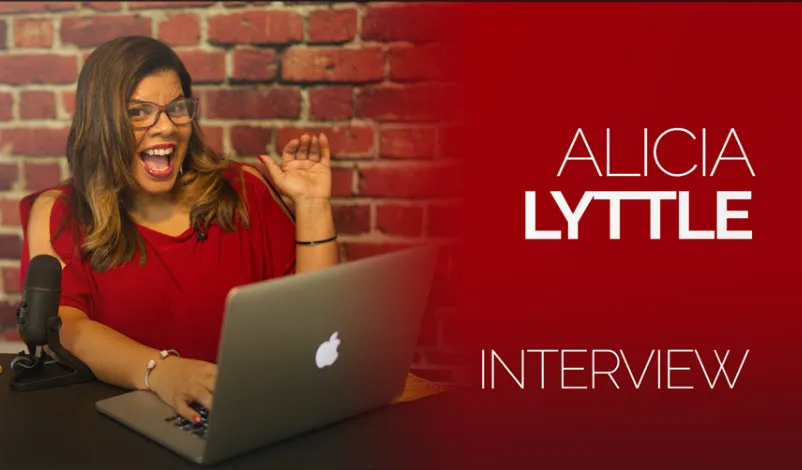
An Interview With Alicia Lyttle
Building an online business doesn't always mean starting with an entirely new idea. Sometimes the opportunity comes from recognising that knowledge you already possess could help someone else solve a problem or achieve a worthwhile result.
However, knowing something and turning that knowledge into a successful product are two different challenges. You need to understand what customers want, find a way to reach them and develop a business that can continue growing beyond the first few sales.
In this archive interview, released in April 2021, entrepreneur, speaker and digital marketing specialist Alicia Lyttle shares how she moved from a promising career in environmental science to building businesses around information products and online marketing.
The conversation explores her early success selling educational material, the importance of business systems, how she rebuilt after a major personal and professional setback, and the three areas she believes entrepreneurs should concentrate on when starting a business.
Listen to the Alicia Lyttle Interview
About Alicia Lyttle
Alicia Lyttle originally planned to pursue an academic career in environmental science. After studying at Tulane University, she worked at the White House during the Clinton administration, within the Council on Environmental Quality.
Her ambition was to continue her education, complete a PhD and establish herself in her chosen profession.
However, an unexpected opportunity changed her direction.
In 2000, Alicia met an entrepreneur who wanted to turn his knowledge of commodity trading into an educational product. Although she had no previous experience building an online business, she agreed to help him work out how to sell the material over the internet.
At the time, there were relatively few training resources available for people wanting to start online businesses.
Alicia began learning through telephone seminars presented by internet marketer Armand Morin, who explained how to build websites and market products online.
Using what she learned, the couple created a website and developed a course consisting of a printed book and CD.
According to Alicia, the business generated approximately $500,000 in sales during its first year.
Those are historical results from her own experience, not typical earnings or a guarantee of what another business might achieve.
What fascinated Alicia was the opportunity to take someone's specialist knowledge, organise it into a product and sell it to people who wanted to learn that subject.
Why Information Products Changed Her Career
The original commodity trading course sold for $297, with an additional shipping charge.
Alicia explains that producing the book and CD cost approximately $7 or $8 per package. Although there were other business expenses, the difference between the production cost and selling price demonstrated the potential of selling educational information.
At first, she was printing the books and duplicating CDs herself in the basement.
It was hard work, particularly while she was also pursuing her academic ambitions, but the experience convinced her that information publishing could become a serious business.
She eventually enrolled in a PhD programme at the University of Michigan. However, after discovering that her online business could generate more income in a month than her professor earned in a year, she reconsidered her plans.
Alicia ultimately left the programme to concentrate on entrepreneurship.
Her experience illustrates an important principle for information publishers. People aren't necessarily paying for the physical materials or digital files themselves. They're paying for knowledge that helps them understand something or achieve a particular result.
That doesn't mean every subject can support a profitable product. The information still needs to be useful, accurate and relevant to an audience willing to pay for it.
The FAQ Marketing Logic Business pillar explores how to identify an opportunity, test demand and develop an offer around something people genuinely need.
How Her Sister Helped Transform the Business
Another interesting part of Alicia's story concerns her sister, who had previously worked at General Electric.
Her sister had experience with business processes and systems, including Six Sigma methods, and immediately recognised that Alicia's growing business needed a more organised approach.
At the time, Alicia was still handling much of the printing, CD duplication and product fulfilment herself.
Her sister questioned why they weren't using outside companies to manage those activities.
Eventually, she joined the business and helped introduce fulfilment services, additional employees and more effective operating processes.
This allowed the company to handle greater sales volumes without relying on Alicia to complete every task personally.
It's a useful reminder that the skills needed to create a successful product aren't necessarily the same as those required to operate a growing business.
Someone might be excellent at developing ideas and attracting customers but less comfortable organising administration, managing suppliers or establishing repeatable processes.
As a business develops, recognising those differences can help identify where additional support would make the greatest difference.
The FAQ Marketing Logic Systems pillar covers practical ways to organise recurring work and make a business easier to manage.
Why Business Knowledge Can Be More Valuable Than the Business Itself
Perhaps the most powerful part of the interview concerns Alicia's experience after the breakdown of her marriage and business partnership.
She explains that the business she'd helped develop had grown substantially, reportedly generating $6 million in revenue during 2010 and serving approximately 400,000 customers.
However, when the relationship ended, Alicia lost access to the company's accounts, customer database and other resources.
She found herself starting again without the financial security or established business infrastructure she'd previously enjoyed.
What she hadn't lost was her knowledge.
Alicia understood how to market products, attract customers and develop online businesses. Her sister also possessed valuable operational experience.
Together, they began looking for a new opportunity.
They discovered that local businesses needed help promoting their services and attracting customers through online marketing.
Their early work involved helping businesses use daily-deal platforms such as Groupon and LivingSocial.
According to Alicia, one promotion generated approximately $200,000 in sales for a resort, with her business receiving a percentage of the revenue.
That success led to referrals and additional clients.
Eventually, Alicia and her sister turned the methods they'd developed into an educational course teaching others how to provide similar marketing services.
She reports that the course generated approximately $1.8 million in revenue over a year.
The specific platforms and results belong to the period discussed in the interview, but the broader lesson remains valuable.
Alicia didn't rebuild by recreating her previous business exactly. She identified a problem, applied her existing knowledge and developed a new offer around the results she could help customers achieve.
For someone considering an information business, this demonstrates why developing practical skills can be such a valuable long-term investment.
Finding Customers Through Social Media
Alicia also discusses how online marketing changed during her twenty-one years in the industry.
When she started, building a website and accepting payments online required considerably more technical knowledge than it does today.
By 2021, business owners had access to website builders, email marketing platforms, social networks and other tools that made it easier to establish an online presence.
However, Alicia believes that having access to technology isn't enough.
Entrepreneurs still need to understand how to attract customers and communicate the value of their products.
She highlights social media as a potential source of traffic, particularly for people who don't have large advertising budgets.
Rather than treating social platforms simply as places to publish promotional messages, businesses can use them to demonstrate expertise, answer questions and develop relationships with potential customers.
The important consideration is whether the activity is reaching people who are genuinely interested in what the business offers.
A large audience isn't necessarily valuable if those people have little interest in becoming customers.
For publishers developing their own websites, the FAQ Marketing Logic Traffic pillar explains how to attract relevant visitors and make useful content easier to discover.
Alicia's Three Priorities for Starting an Online Business
When asked what advice she would give someone starting today, Alicia identifies three areas that deserve particular attention.
The first is people.
Before creating a product, she believes entrepreneurs should understand who they're trying to help. What problems do those people have, what are they looking for and how can the business provide something useful?
The second is planning.
Once you've identified an audience and a possible solution, you need a practical plan for reaching customers and delivering the offer.
This doesn't necessarily require an elaborate business plan. It means understanding what you're trying to achieve and the activities needed to make progress.
The third is profits.
Alicia emphasises that generating sales isn't the same as operating a profitable business. Owners need to understand what they're charging, what they're spending and how much money remains after expenses.
It's an especially important distinction for information publishers, where high revenue figures can sometimes attract more attention than the actual profitability of a product.
A business selling thousands of pounds' worth of products may still struggle if advertising, commissions, software and other expenses consume most of the income.
These three priorities provide a straightforward framework for evaluating a business idea before committing substantial time or money.
What Can Online Business Owners Learn From This Interview?
What stands out about Alicia Lyttle's experience is that her greatest asset wasn't a particular website, product or marketing platform.
It was her ability to understand a market, develop a useful offer and apply the knowledge she'd gained through years of practical experience.
Her early success came from helping someone turn specialist knowledge into an educational product. Later, when her circumstances changed dramatically, she used those same underlying skills to establish a different business.
The interview also shows why operational systems become increasingly important as a business grows. Alicia's sister helped transform a labour-intensive operation into something capable of serving a much larger customer base.
Alicia also speaks about serious personal and health challenges during her journey, including repeated cancer diagnoses. Her account of those experiences adds an important human dimension to the interview, although her personal views about mindset and health should not be treated as medical guidance.
For someone considering an information publishing business, the most practical lesson is to concentrate on developing useful knowledge and understanding the people you want to serve.
Start with a problem you can help solve, develop an offer that provides genuine value and pay attention to the financial and operational side of the business.
You don't necessarily need an entirely original idea. Sometimes the opportunity lies in taking knowledge you already possess and presenting it in a way that helps other people achieve something worthwhile.
Listen to More of the Conversation
Download the Interview Transcript
If you'd prefer to read the conversation or revisit particular points, you can download the complete Alicia Lyttle interview transcript.
→ Download the Alicia Lyttle Interview Transcript
The transcript preserves the original archive conversation released in April 2021. References to websites, products, marketing platforms and business practices reflect that period and may no longer be current.
Want to Explore Building an Information Publishing Business?
Alicia's experience demonstrates how specialist knowledge can become the foundation of an information business, particularly when it's developed into a product that helps customers solve a problem.
However, creating every product yourself isn't the only way to get started.
Product licensing offers another approach, allowing you to obtain appropriate rights to existing material and develop products around content you haven't created entirely from scratch.
If you'd like to understand how this business model works, I've got a free resource that introduces the opportunities involved.
→ Discover How Product Licensing Works
Discover More Audio Interviews
The FAQ Marketing Logic Audio Interviews collection brings together conversations with experienced marketers, entrepreneurs and business owners, covering different aspects of building and growing an online business.
Each interview includes an accompanying article and downloadable transcript, allowing you to explore the ideas at your own pace.